

For anyone spending time in smoke shops or browsing online kratom vendors, you might have noticed something new. Vape cartridges labeled as kratom and powders meant for inhalation. These are the products designed to be smoked rather than swallowed.
Now this raises an obvious question. Can you actually smoke kratom? And more importantly, should you?
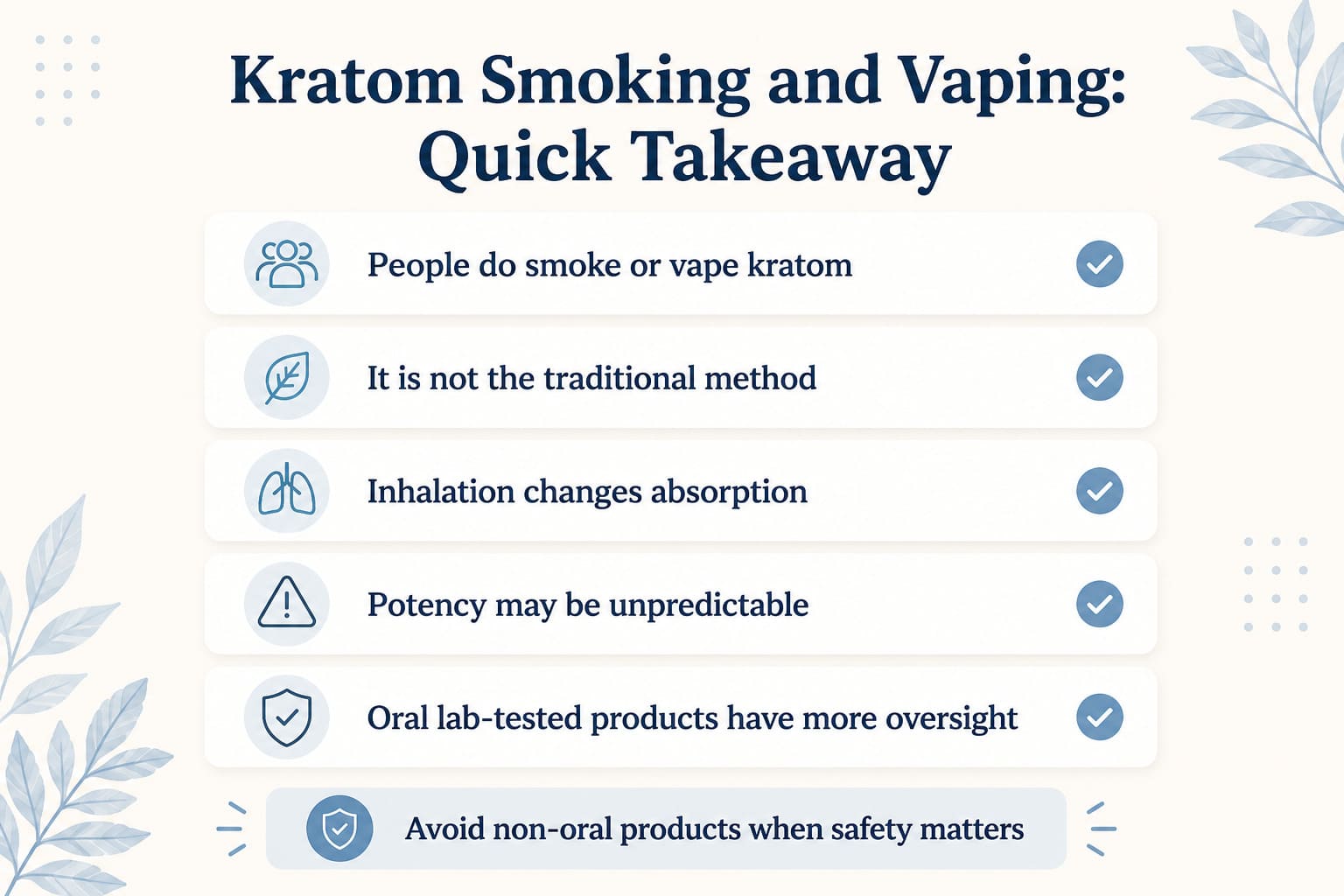
The short answer is yes. People smoke and vape kratom. But there is a much longer and more concerning answer about why this is a dangerous trend that experts are increasingly warning against.
Let me walk you through what research actually says.
Yes, People are Smoking Kratom
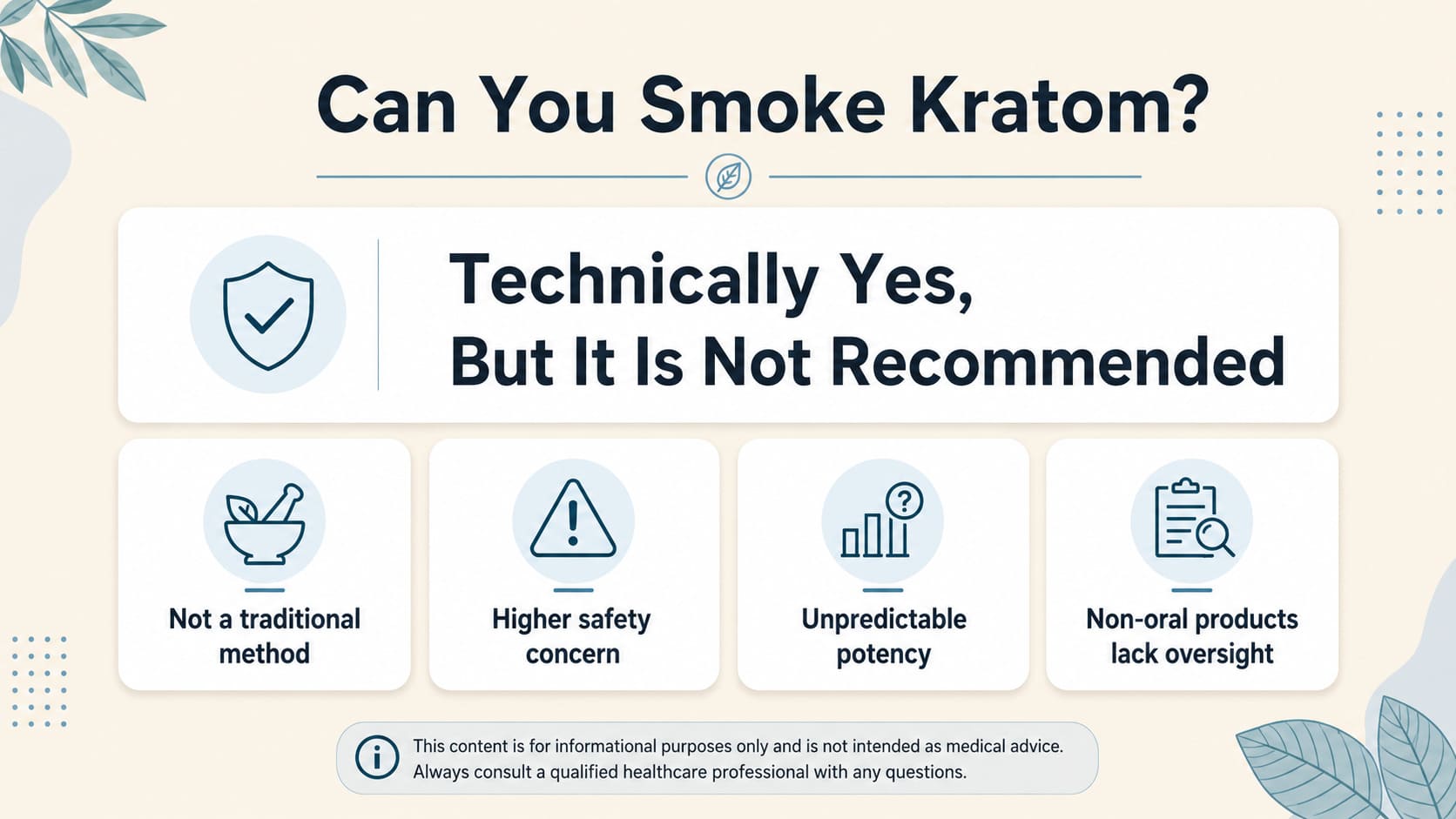
Historically, kratom has been consumed orally. In Southeast Asia, where the plant originates, people traditionally chewed fresh leaves or brewed them into tea. That changed as kratom made its way to Western markets.
Currently, some users smoke dried kratom leaves in pipes or mix the powder with tobacco or cannabis. More recently, vaping products containing kratom extracts have come up in smoke shops and online retailers. These products are sold in colorful packaging with flavors that can appeal to younger users.
But wait, don’t miss the critical part. These Nonswallowed products technically violate federal law. The Dietary Supplement Health and Education Act requires that dietary supplements be intended for oral consumption. Moreover, products designed for vaping or smoking fall outside regulatory oversight.
Why Is Smoking Kratom Different from Oral Use?
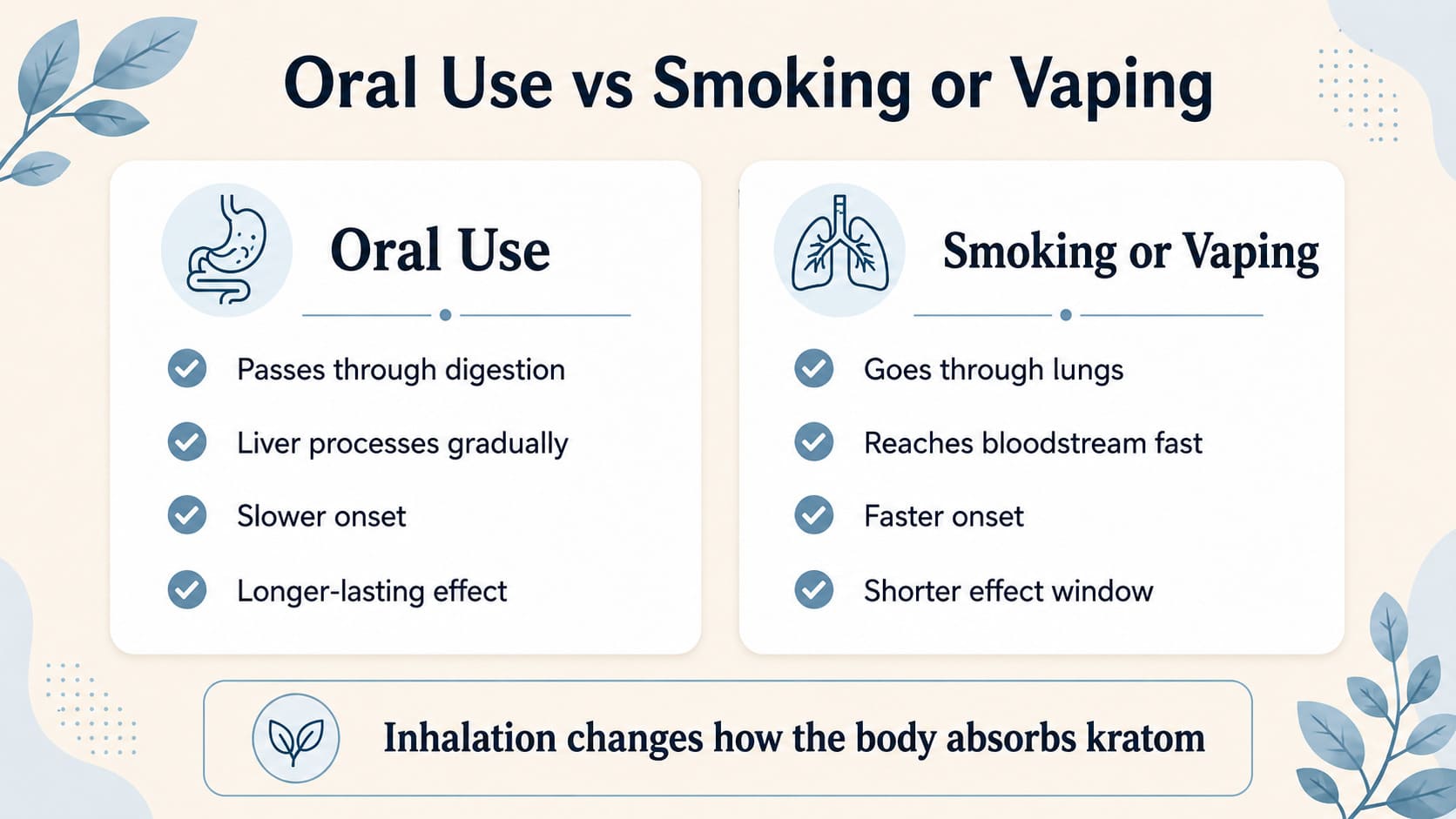
When you swallow a kratom capsule or drink it as tea, the alkaloids pass through your digestive system. Your liver metabolizes them gradually. The effects come on slowly and last for several hours.
However, smoking or vaping changes everything here. Inhaling a substance sends it directly to your lungs. The compound is absorbed in your bloodstream and reaches your brain within seconds. This causes a more intense high that also fades more quickly.
That may sound appealing to some users but it comes with serious risks. First, the potency becomes unpredictable. The same amount of kratom that would be mild when swallowed could be overwhelming when smoked. This increases the risk of overdose.
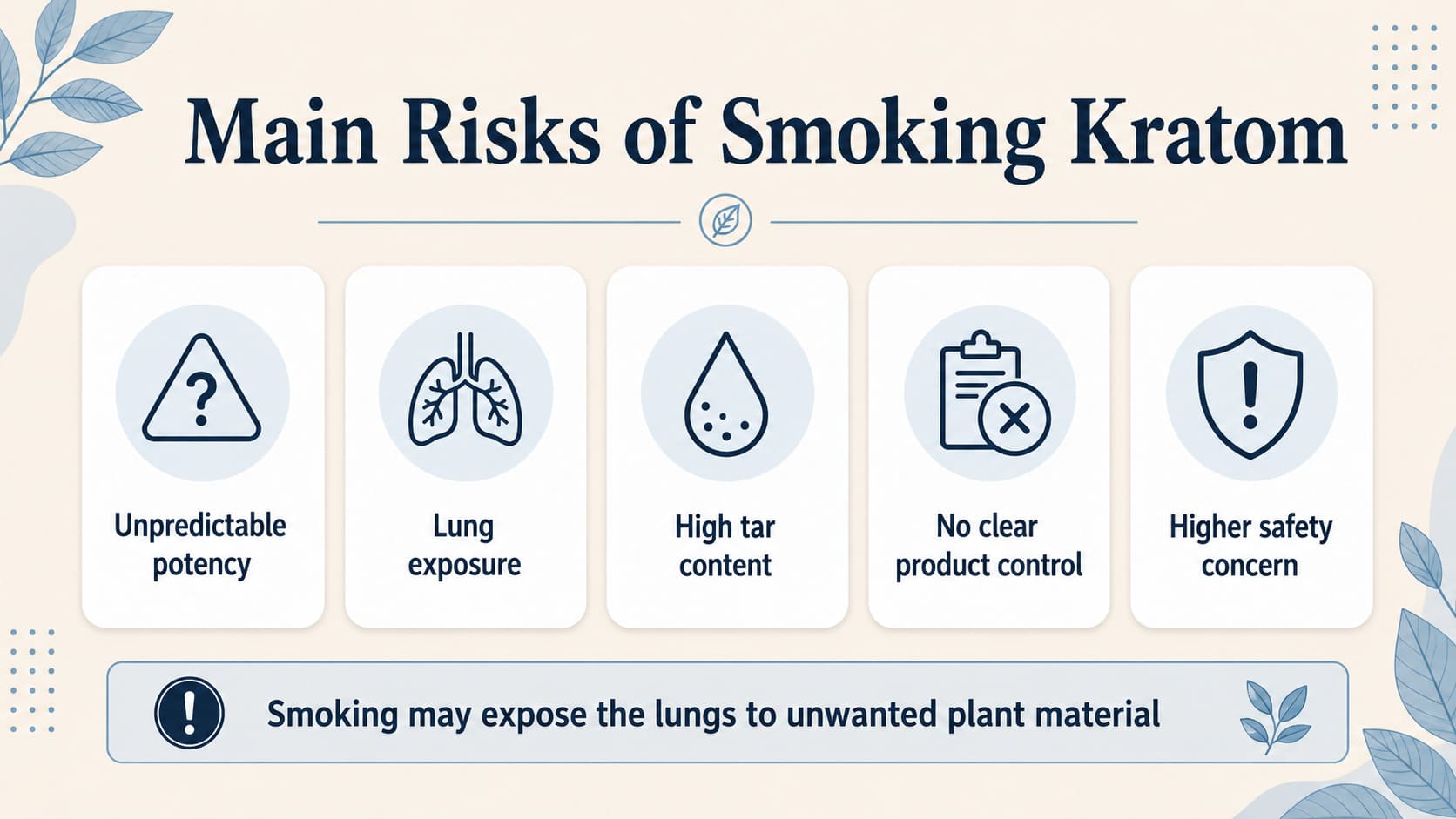
Second, kratom leaves naturally contain high levels of tar. When you smoke them, those tars are released into your lungs which is similar to unfiltered tobacco. If done long term then it can increase your risk of lung disease and cancer.
Knowing More About Vaping Kratom and 7 OH
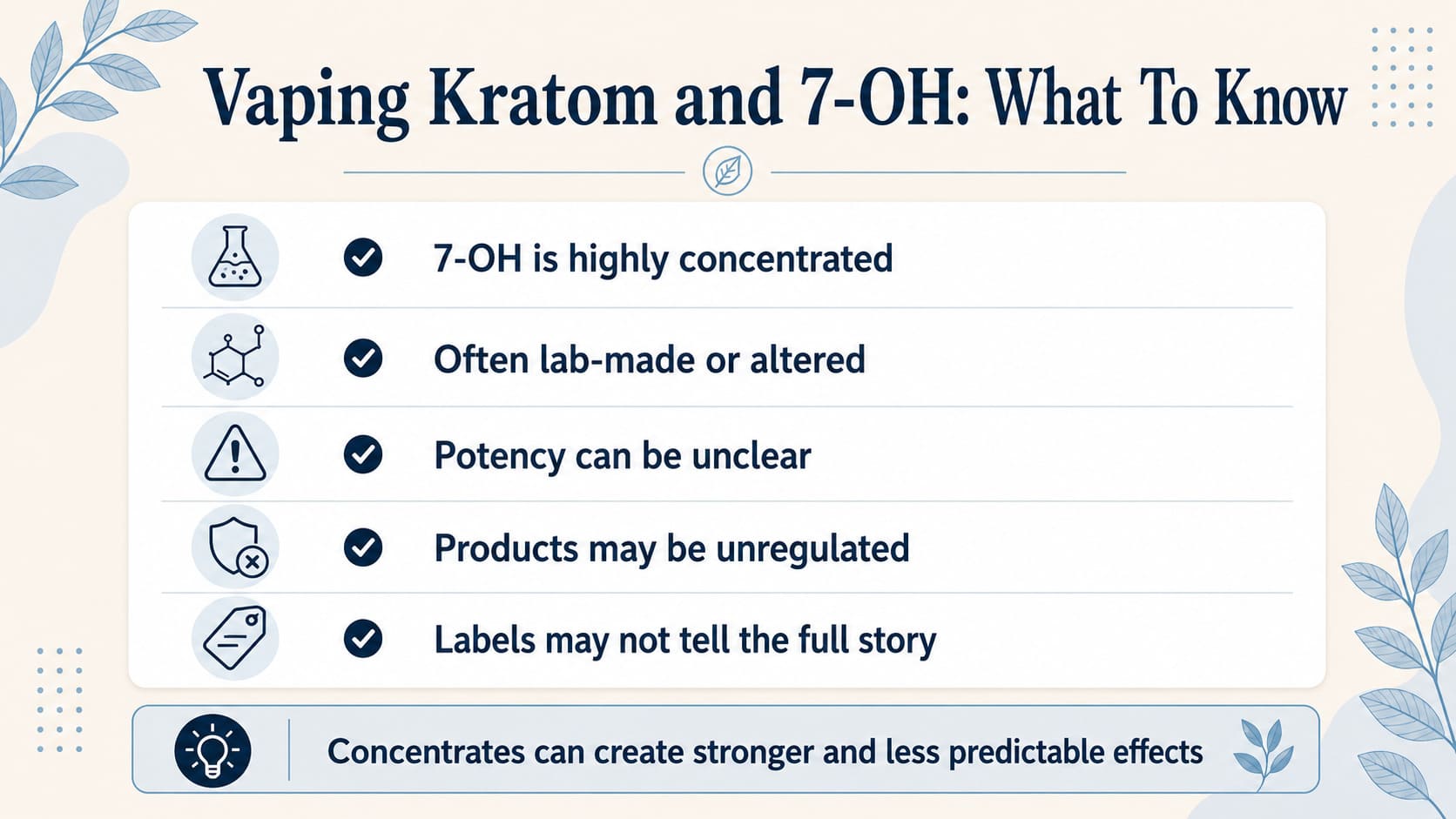
Vaping products containing concentrated derivatives have entered the market. Here is what makes 7 OH different. It is not naturally present in high concentrations in kratom leaves. Rather, it is produced semi-synthetically. This means it is manufactured in labs using chemical processes.
Furthermore, the FDA has recommended that 7 OH be classified as a Schedule I controlled substance because it poses a threat to public health and has a high potential for abuse.
Vaping these products may even be more dangerous than smoking traditional leaf kratom. The concentrated nature means users are getting much higher doses of potent alkaloids with each puff. And because these products are unregulated, there is no way to know what is actually in them.
Regulatory and Health Warnings
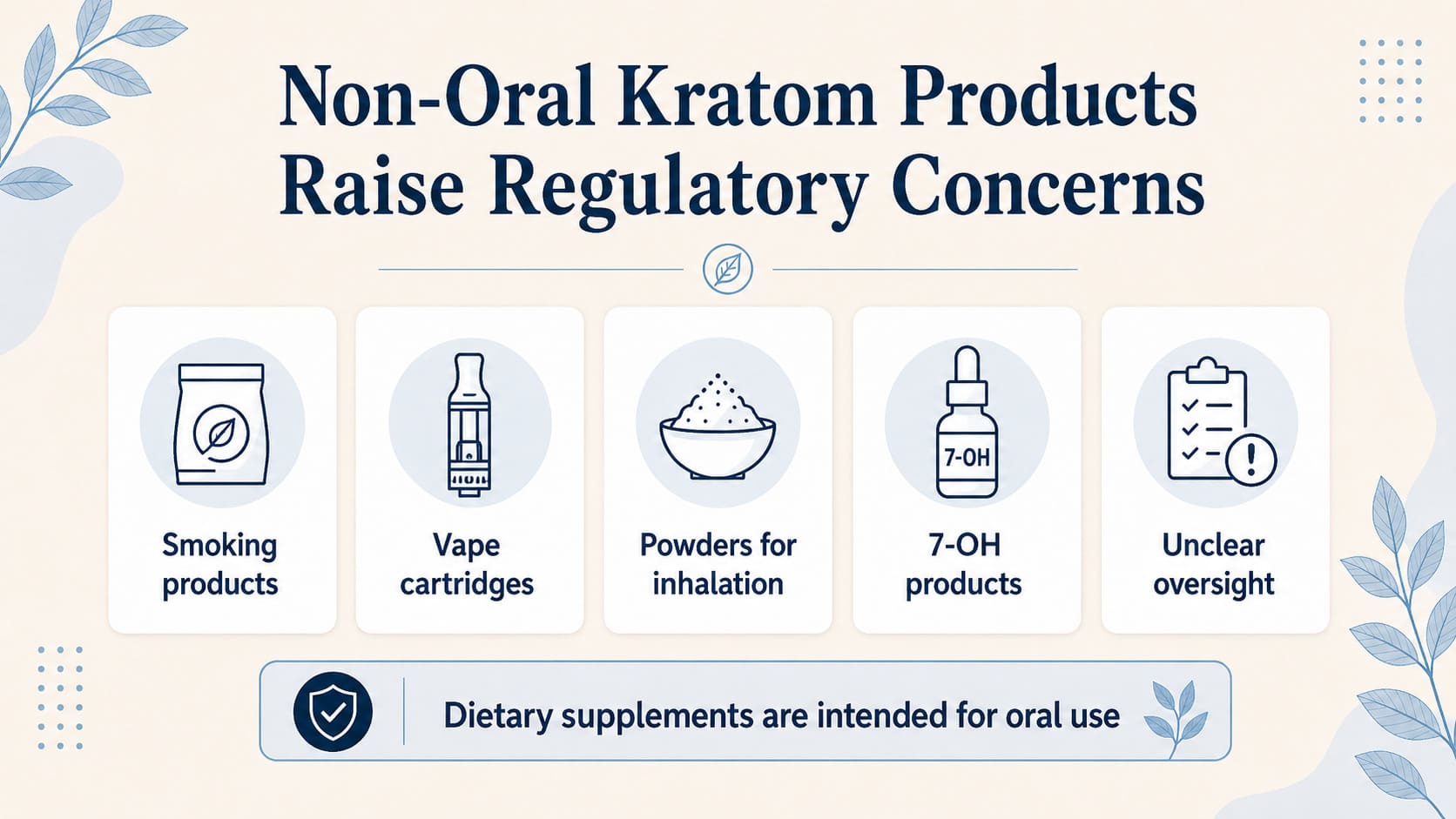
It is true that multiple government agencies have warned about non-oral kratom products. The California Department of Public Health explicitly states that foods and other products containing kratom and 7 Oh are illegal to sell or manufacture for consumption.
A regulatory analysis published in a public health journal confirmed that Nonswallowed kratom products violate the Dietary Supplement Health and Education Act. These alternative methods bypass regulatory oversight entirely. They create safety concerns regarding product quality, concentration, and contamination.
Even smoke shop employees who are the primary sellers of these products often provide minimal or misleading safety misinformation. A secret shopper study found that a whopping 81% of smoke shop employees made health claims about kratom. But, many failed to disclose the risks. Only 24% mentioned any adverse effects with dependence being the most common risk discussed.
Final Words
So, can you smoke kratom? Technically yes. People do it. Should you smoke kratom? The evidence strongly suggests no. Hence, if you choose to use kratom, oral consumption of lab tested products from reputable sources remains the only method that has regulatory oversight.
Furthermore, Whole Earth Gifts carry only AKA GMP certified products intended for traditional oral use. Your long term wellbeing is the only thing that matters to us.
FAQs
1. Can you smoke kratom leaves?
Yes, some people smoke dried kratom leaves in pipes or mix them with other herbs. However, this method is not traditional and carries increased health risks compared to oral consumption.
2. Is vaping kratom safer than smoking it?
No. Vaping kratom, especially 7 OH concentrates, may be even more dangerous. These products are unregulated, and their potency is unpredictable. The FDA has recommended Schedule I classification for 7 OH products.
3. Why don’t more people smoke kratom?
Smoking kratom is relatively rare because the alkaloids may not be efficiently absorbed through the lungs compared to oral consumption. Additionally, the high tar content makes the smoke harsh and potentially harmful .
4. Can smoking kratom cause an overdose?
Yes. A documented case report describes a patient who lost consciousness for six hours after smoking kratom and required emergency surgery for compartment syndrome .
5. Are kratom vapes legal?
Nonswallowed kratom products, including vapes, violate the Dietary Supplement Health and Education Act. Multiple states, including California, have issued warnings that these products are illegal to sell for consumption.


