

If you have been using kratom or you are just curious about it, one of the most common questions that comes up is how long it stays in your urine system. So, no matter whether you are thinking about an upcoming drug screening, managing your health, or any other thing, you are in the right place.
Let’s break it all down in a simple way here.
What Is Kratom, and Why Does It Matter?
Kratom is a tropical tree native to Southeast Asia. Its leaves contain active chemical compounds called alkaloids. That is the two most important being mitragynine and 7-hydroxymitragynine. These are the substances that your body absorbs, metabolizes, and eventually eliminates. And they are also what drug tests are for. If you are new to this topic, read our full guide on what is kratom before learning about urine testing.
According to the US Drug Enforcement Administration, kratom is currently not a federally controlled substance in the United States. This is even though it’s classified as a drug of concern. However, its legal status is varied by state. So, you must check the local regulations if relevant to you.
So, How Long Does Kratom Stay in Your Urine?
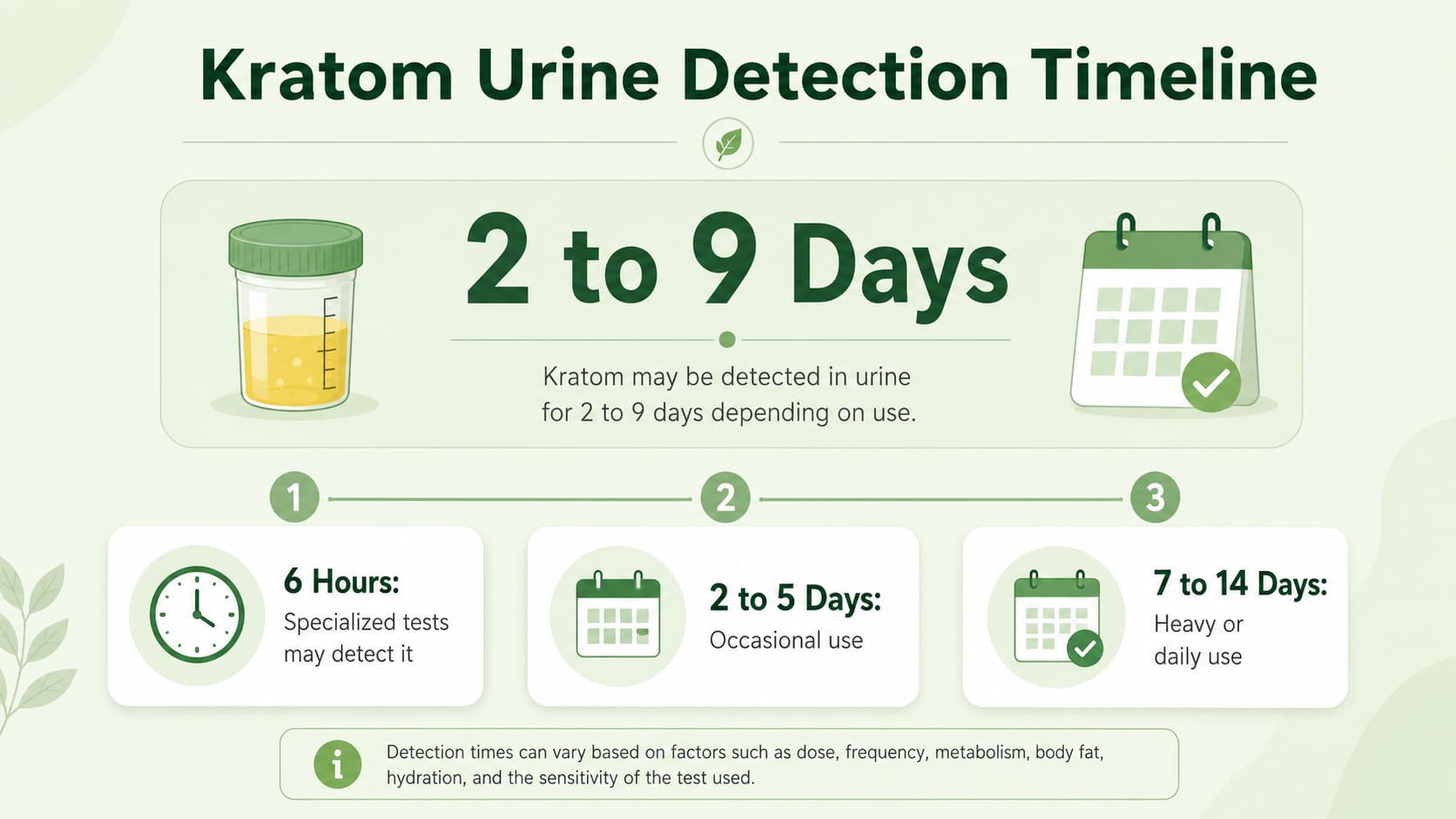
Here is the short answer for you. We can easily detect kratom in urine anywhere from 2 to 9 days. Yet, it depends on a range of factors. However, the window can stretch up to 2 weeks for heavy chronic users, according to clinical data from recovery specialists at Alpas Wellness Centers. For a wider breakdown across different test types, read our full guide on how long kratom stays in your system.
The reason urine tests are the most commonly used method to detect kratom is they offer a wider detection window over blood or saliva. And they are actually cost-friendly. Specialized urine tests can detect mitragynine starting at roughly 6 hours after your last use.
How Your Body Actually Processes Kratom?
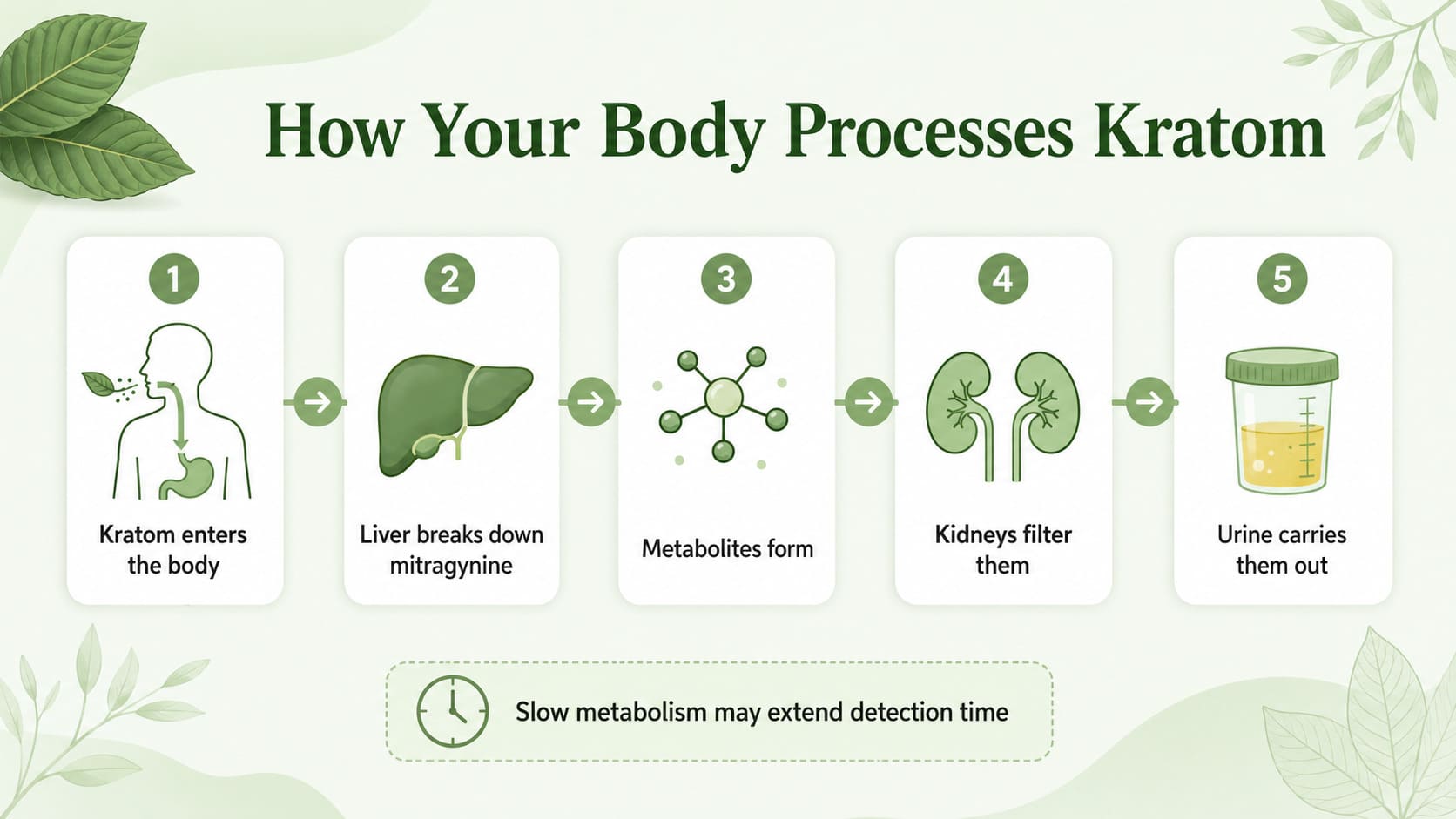
Your body is mainly like a processing plant. Kratom enters and your liver gets to work. The liver makes use of special enzymes called CYP3A4 and CYP2D6 to break down mitragynine into smaller pieces called metabolites. These metabolites are what urine tests actually look for.
Now let’s talk about something interesting. Some people can be poor metabolizers. Their liver works slowly due to their genetics. About 7 to 10 percent of the population falls under this category. If you are one of them, kratom will stay in your system longer than average.
Your kidneys then filter out those broken down pieces and send them to your bladder. That is why urine tests are so effective. The metabolites hang out in your bladder until you go to the bathroom.
When Are You Actually Tested for Kratom?
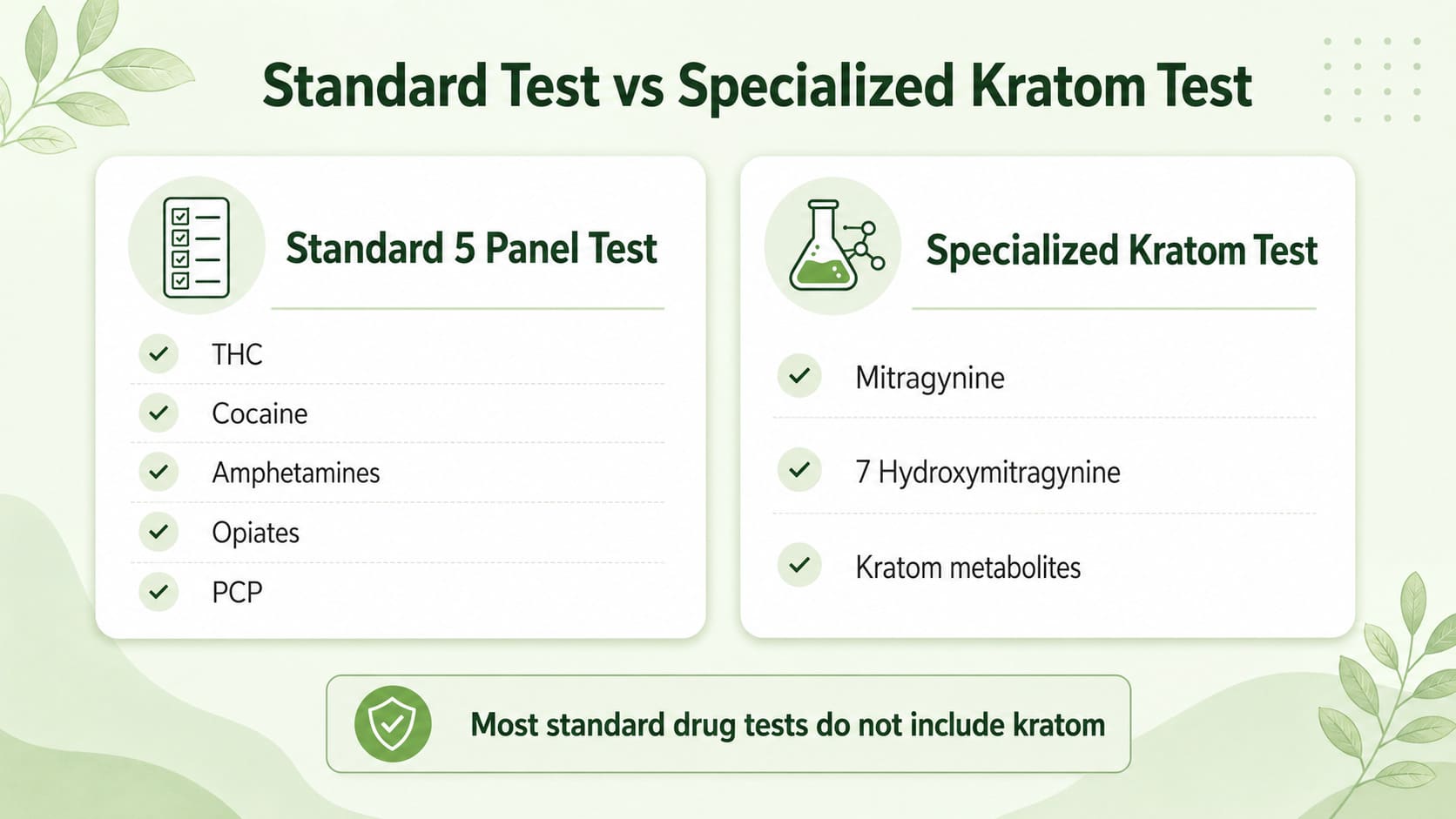
Most people worry about kratom showing up on a job screening. But the reality is different. Your employer is not spending any extra money on a specialized kratom test. So, who mainly tests for it?
- Drug Courts and Probation Programs – These programs use expanded testing panels that include newer substances like kratom. This is for states where it is regulated or banned.
- Pain Management Clinics – Many clinics need patients to sign contracts agreeing not to use any unapproved substances including kratom. They test daily to enforce these agreements.
- Military Branches – The Coast Guard has issued a lawful general order that prohibits kratom use entirely. Other branches have added it to their expanded random screening panels.
- Rehabilitation Facilities – Inpatient and outpatient treatment programs often test for kratom as a part of substance monitoring.
- Healthcare Providers – Doctors prescribing medications like Suboxone or methadone may test for kratom to check for interactions or unapproved supplement use.
Know How Specialized Kratom Urine Tests Work
Urine is definitely the most common method when someone wants to test for kratom. Specialized labs use advanced technology that can detect mitragynine at concentrations as low as 0.5 nanograms per milliliter.
Also, there are immunoassay tests that work like a quick screening tool. These are faster and cheaper but can sometimes produce false positives. So, when a screening test comes back positive, labs confirm it with more accurate technology to rule out any false positives.
How Long Should You Wait For A Kratom Urine Test?
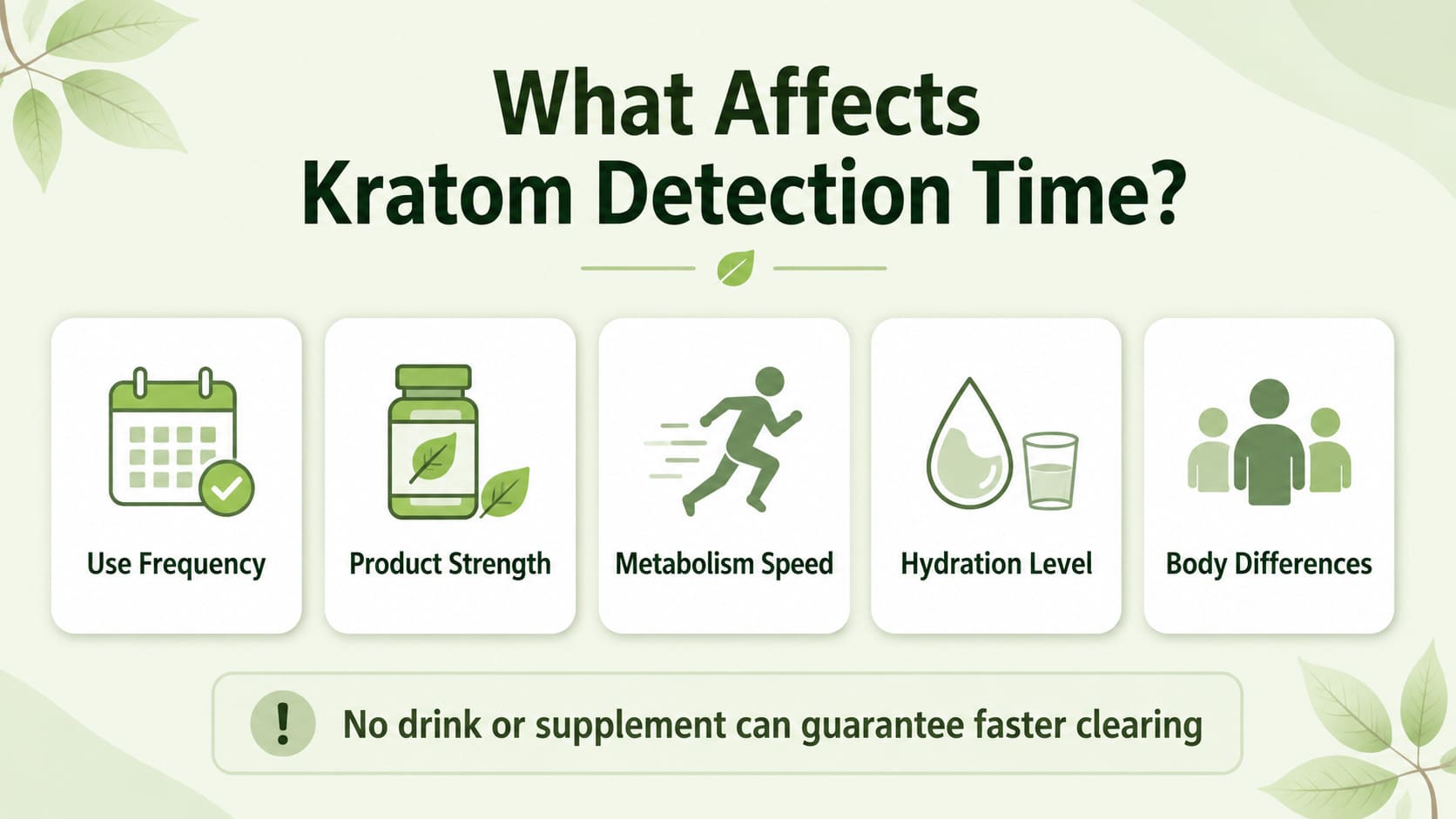
If you know you have a specialized kratom test coming up, here is how long you must wait. Occasional users can stop seven days ahead of time to guarantee a negative result. For heavy and chronic users, you must allow at least nine to fourteen days. The accumulation of metabolites in frequent users means they take longer to fully clear.
There is no supplement or drink that will flush kratom out of your system faster. Be very skeptical of any product that claims otherwise. So, staying hydrated, eating well, and giving your body time are the only reliable methods.
Final Thoughts
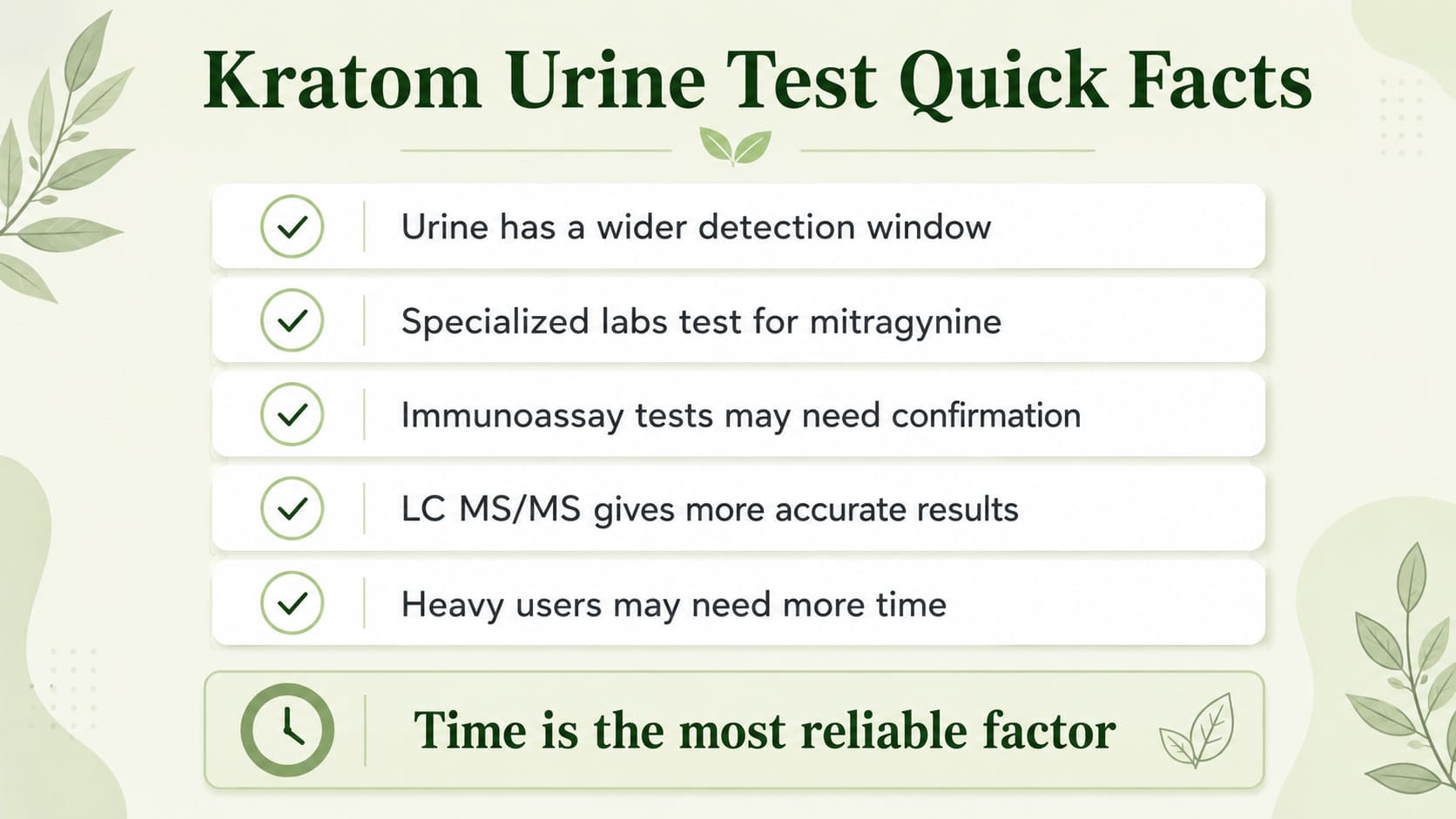
Here is what you must remember. Kratom stays detectable in urine for about 5 to 7 days. Heavy users may test positive for up to weeks. However, none of that matters unless someone is specifically looking for kratom with a specialized test. Most standard drug tests do not include kratom. If you are in a situation where specialized tests are necessary, then you should be aware of the detection windows and plan accordingly. If you plan to buy kratom, choose a trusted source and read the product details first.
FAQs
1. Will kratom show up on a 5 panel drug test?
No. A standard 5 panel test looks for marijuana, cocaine, amphetamines, opiates, and PCP. Kratom is not on that list.
2. How long does kratom stay in your urine for a drug test?
For occasional users, about 2 to 5 days. For heavy daily users, up to 7 to 14 days.
3. Can drinking water help flush kratom out faster?
Staying hydrated can dilute your urine, but it will not speed up how fast your body actually processes and eliminates kratom. Do not over hydrate right before a test, as this can raise suspicion.
4. Does the type of kratom product matter for detection?
Yes. Concentrated extracts and 7 OH products are more potent and may lead to longer detection windows compared to traditional leaf powder because you are consuming higher concentrations of alkaloids.
5. What is the most accurate kratom urine test?
LC MS/MS, which stands for liquid chromatography tandem mass spectrometry, is the gold standard. It is very accurate and can detect extremely small amounts of mitragynine.
6. Can other medications cause a false positive for kratom?
Yes, in rare cases. Research has found that high doses of methadone and its metabolite EDDP can cause false positives on certain kratom immunoassay tests. Confirmatory testing resolves these false positives.
7. How is kratom eliminated from the body?
Your liver breaks down mitragynine using enzymes called CYP3A4 and CYP2D6. The resulting metabolites are then filtered out by your kidneys and excreted in your urine.


