
Kratom Colors
White, green, red, gold and blends, in five parts below.

White Vein Kratom
The color name carrying the biggest claim, and the one the research contradicts most directly. What white means on a label, how the powder gets there, and why the young leaf story runs backward.
Green Vein Kratom
Green is what kratom powder looks like before anyone does anything to it. What the green label marks, and why the most common color is the hardest one to pin down.

Red Vein Kratom
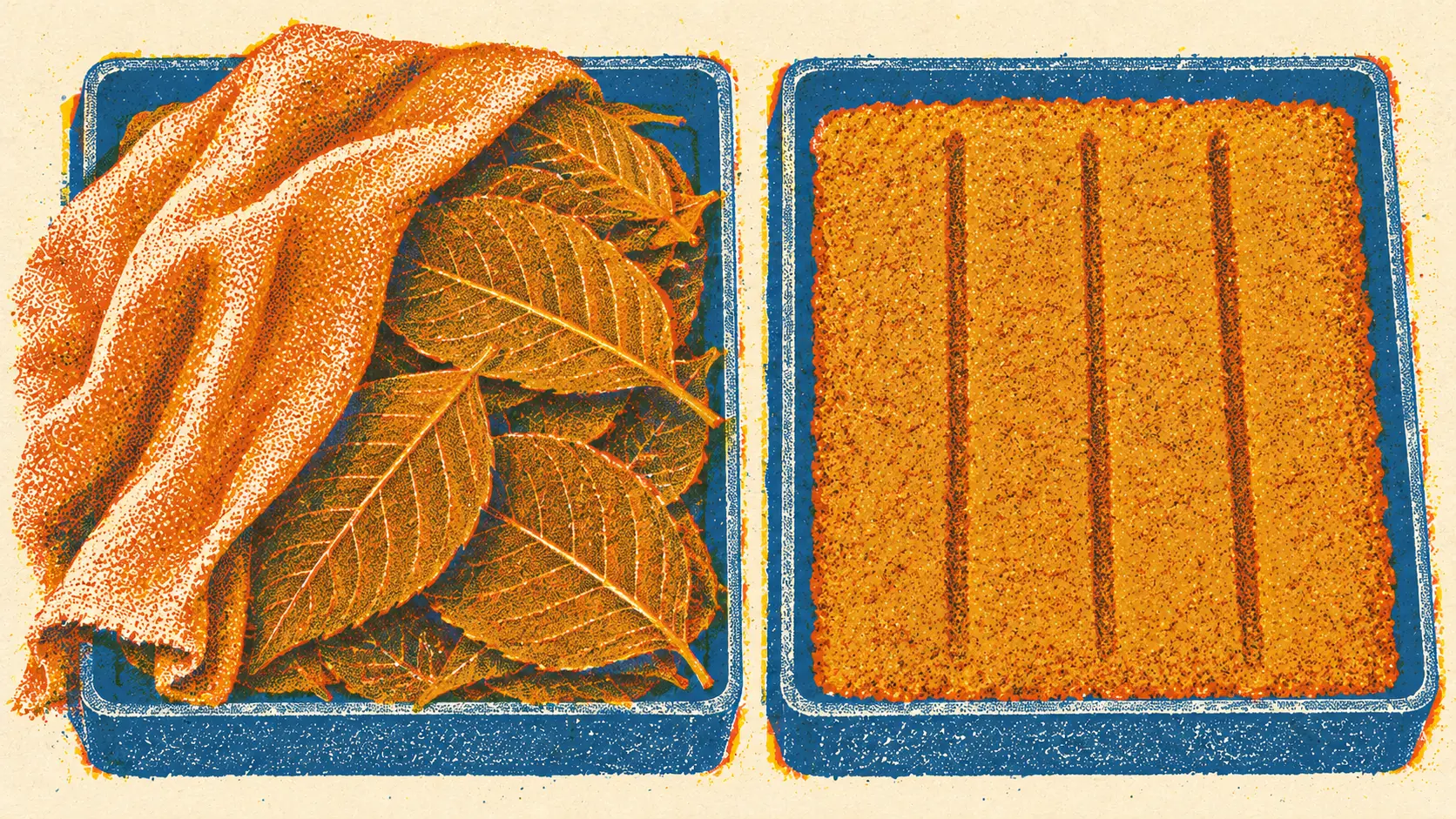
The longest handling of the four, and the widest gap between what’s documented and what’s advertised. What reds go through after picking, and where the fermentation claim comes from.
Gold Kratom
Gold isn’t on the tree. Where the fourth name came from, why no two brands make it the same way, and what a package carrying it can honestly claim.
Kratom Blends
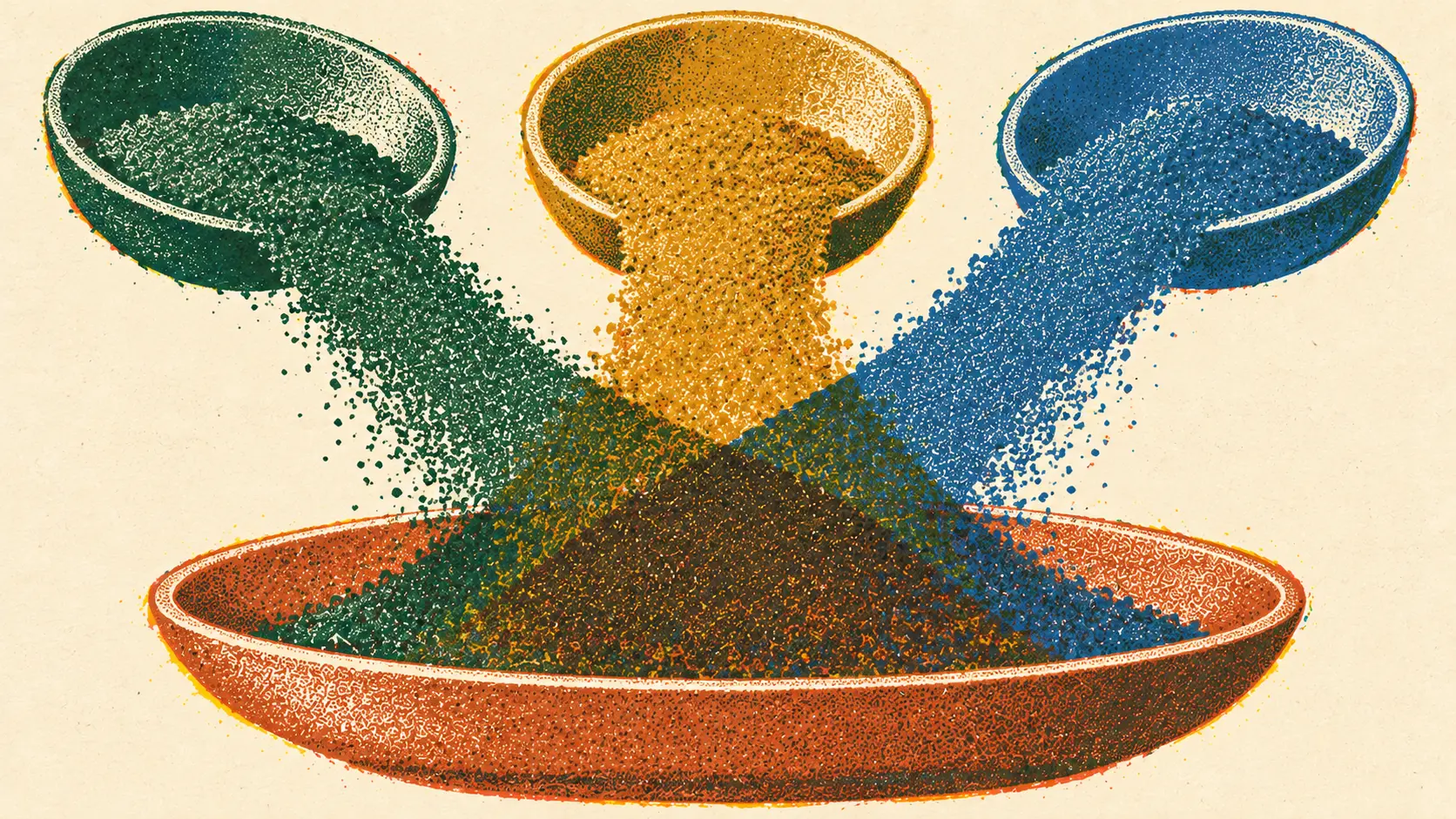
Two or more leaf types in one pouch, sold under a single name. Why brands blend, what a label owes you, and how a blend differs from a single strain.
What a color name on a package is actually reporting
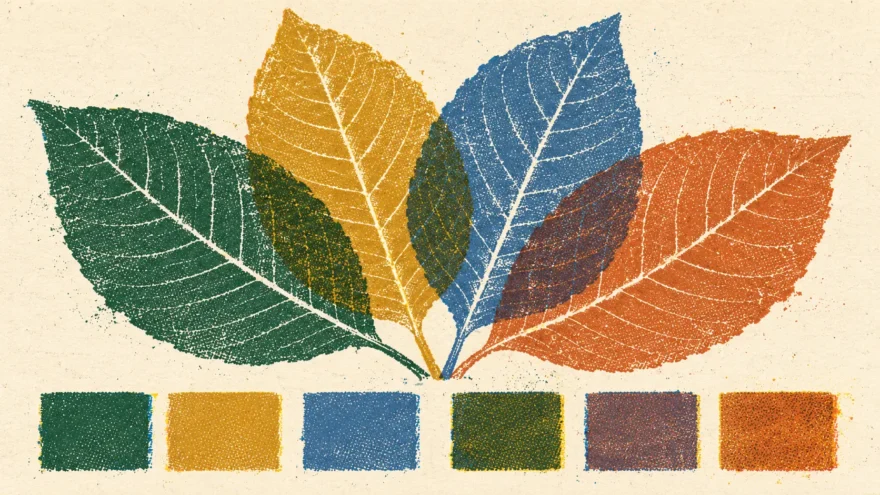
A color name reports what happened to the leaf after it was picked, and nothing more reliable than that. Red, green, white and gold are not four plants, four harvests or four chemistries. They’re four words for how one batch of leaf was handled between the tree and the mill, assigned by the person who dried it. Three of them started out as names for the colored rib running down a leaf. Gold never was one, and it names a way of making powder rather than anything that grows.
What’s distinctive about this subject is that most of it has been measured, and almost none of the measurements say what the shelf says. Four separate research teams have compared colored kratom against itself and found the label does not predict what is in the powder. The growers who pick the leaf recognize two colors rather than four, and sell both at the same price. And on one American storefront the arrival of the four color vocabulary can be dated, roughly, to a change between 2013 and 2014. This page covers all of that, and the five articles above take one color each.
Where did the color names come from?
Nobody’s published a primary source for when American sellers started naming kratom by color. We went looking, and what we can offer is a date on one storefront.
The vein distinction itself is old and it is real. A 1974 survey of the plant’s chemistry, citing work from 1965, records that people where the tree grows told apart kratoms with red midribs and kratoms with green ones. The midrib is the thick central rib running down the middle of a leaf. That’s two categories, described in the country the leaf comes from, sixty years ago. The four word system on an American shelf is a later and looser thing, and how it got here sits alongside the rest of the record in history of kratom.
The two color record isn’t only historical. A recent survey of a kratom growing village in Kapuas Hulu, the Indonesian regency most of the American supply comes from, found that growers there recognize exactly two vein types, red and green. No white and no gold. Green grows wild along the river. Red was brought to the village by an outside development organization, and it is the cheaper seedling of the two.
On this side of the ocean, the vocabulary can be watched arriving. One of the oldest kratom storefronts in the country, selling since 2003, listed the same product set in December 2010, December 2011 and January 2013. Not one item carried a color. They were sorted by form and by grade instead: crushed or powdered, leaf from Thailand, maeng da, premium commercial, extract. By September 2014 that catalog carried red vein powder and red vein crushed leaf as new items.
The part worth noticing is what happened to the old items. Two products that had been listed as leaf from Thailand kept their catalog numbers and gained a color word in their names. Same stock, same product record, new label. That is one store, and we are not going to turn it into a national date. What it shows is that in at least one case the color vocabulary arrived as a relabeling of what was already on the shelf.
Every written account of how the names spread says roughly the same thing, and not one of them cites a source: early sellers borrowed regional words and local slang, and the terms hardened through repetition rather than through anyone checking them. Traditional use carried no strain names and no color marketing at all, which is covered in kratom strain names.
Does a color name predict what is in the powder?
No. Four research groups have tested that question between 2023 and 2026 and none of them found a link between vein color and what a laboratory measures in the leaf.
The largest sampled 134 cultivated trees in southern Thailand, a little over half of them green veined and the rest red veined. Vein color made no measurable difference to alkaloid content. Alkaloids are the compounds in the leaf a laboratory measures, and mitragynine is the one that appears on every certificate of analysis. What did move the numbers was the calendar. Leaf picked in June carried about seven times the mitragynine of leaf picked in October, off the same trees. What mitragynine is and how it is reported is covered in kratom alkaloids.
A second group ran certificates of analysis on three separate batches each of six differently labeled products. The laboratory could not tell them apart on any of the five compounds it measured. In the same study, 644 people described the products they used, and their descriptions lined up closely with the marketing. That’s worth sitting with rather than waving off. People report real differences, and the paperwork behind those products doesn’t show one. Nothing on this page says anyone imagined their experience. What it says is that the color word on the package is not the evidence for it.
A third group took a single batch of leaves and dried it two ways. The half dried hot came out reddish, the half dried cool came out green, and the two were chemically similar. Then the reverse. Two powders that both looked green, one wilted for twelve hours before drying and one not, came back significantly different from each other. That team’s own conclusion was that powder color reports the drying shed rather than the chemistry, and that selling by color can mislead.
The fourth found one tree producing the full range from green vein to red vein depending on how old each leaf was. Not four trees. One. Where a leaf sat in its own life cycle mattered more than which plant it came off.
Read together, the finding is narrow and it is firm. What a leaf looks like does not reliably tell you what is in it.
Then why do some studies find a difference?
Two do, and they disagree with each other.
The paper the industry quotes is from 2018, and it reported red stronger than green stronger than white. It tested one sample per strain, bought commercially, with each color coming from a different country. That is the flaw. Its own two Malaysian samples sat at opposite ends of its range, and the figures are worth reading carefully. That paper does not report shares of the leaf. It first pulls the alkaloids out of the powder, and what it pulls out comes to roughly 1 percent of the dried leaf. It then reports what share of that small extract each compound makes up. On that measure the red vein Malaysian came in at 4 percent mitragynine against nearly 60 percent for the green vein Malaysian, with a second compound running the opposite direction. A gap that wide between two samples tells you the samples were doing the work rather than the colors.
A 2024 study using one laboratory method found red higher than green. A Thai study using another found green higher than red. Both are small, and they point opposite ways.
That’s the honest state of it. The small single sample comparisons cancel each other. The large ones find nothing. We go with the large ones, and we’d rather print the disagreement than pretend it isn’t there.
What actually changes what is in the leaf?
Season, leaf maturity, geography and the drying shed. Our page on where does kratom come from already argues that what happened to a leaf in the week after picking matters more than which riverbank it grew on. This is what happens in that week, and it’s why a color name is a poor summary of it.
Start with the season, because two very different sources agree on it. Growers in Kapuas Hulu do not pick in the rainy season, because the leaf comes out stunted. The Thai study that tracked mitragynine month by month found its low point in October, in the rain. Farmers and instruments reached the same answer from opposite ends, and neither was looking at color.
Leaf maturity moves the numbers as well, and it runs the opposite way from the marketing. That argument now sits in full on white vein kratom.
Geography moves the numbers further than anything printed on a label. Thai grown material has been measured with mitragynine making up about two thirds of its total alkaloid content, against roughly an eighth in Malaysian material.
Drying is not storage. Wilting the leaf before drying raised mitragynine by between 14 and 65 percent in one trial. Drying cool preserved more of it than drying hot. That week has the largest effect on the finished powder and the least attention paid to it, and it’s the week a color name is summarizing.
What do the people who grow it call the colors?
Two names, and at the farm gate the color is worth nothing.
In the village surveyed in Kapuas Hulu, green is the wild type growing along the river and red was introduced from outside. A green seedling costs more than a red one. The leaf off either sells for the same price.
Then there’s what happens to a leaf before it becomes powder. Once dried, it is rubbed and sifted until the leaf separates from its ribs. Those ribs are sold on separately at a small fraction of what the powder brings, and villagers burn them as mosquito coils.
The midrib is the only part of a kratom leaf that carries any color at all. It is stripped out and sold as a byproduct before the powder exists. That single fact does more damage to the four color system than any study does. Whatever a colored vein was, it is not in the package.
So what do you do with a color name?
Read it as a handling record and a shelf label, then go and look at the certificate.
A color name isn’t a lie and it isn’t useless. A vendor applying red consistently, to leaf dried the same way by the same farm, is giving you something you can order against twice. We sell by color for that reason. What the name is not is a measurement.
Our own certificates make the point from the inside. We publish a report for every lot and they are filed by color, which makes it easy to assume the color is what separates them. It isn’t. They differ because they’re different samples of a farm crop. Send us four reds and we’ll show you four numbers. That’s what a certificate of analysis is for, and it’s why the number on it carries more than the word on the front of the package. How to read one is on kratom lab testing, and why two lots of the same thing never match exactly is on kratom batch variation.
If you take one line off this page, take this one. The color on a package describes a process. It doesn’t describe a result.
Back to the Kratom Guide.