
Kratom Forms
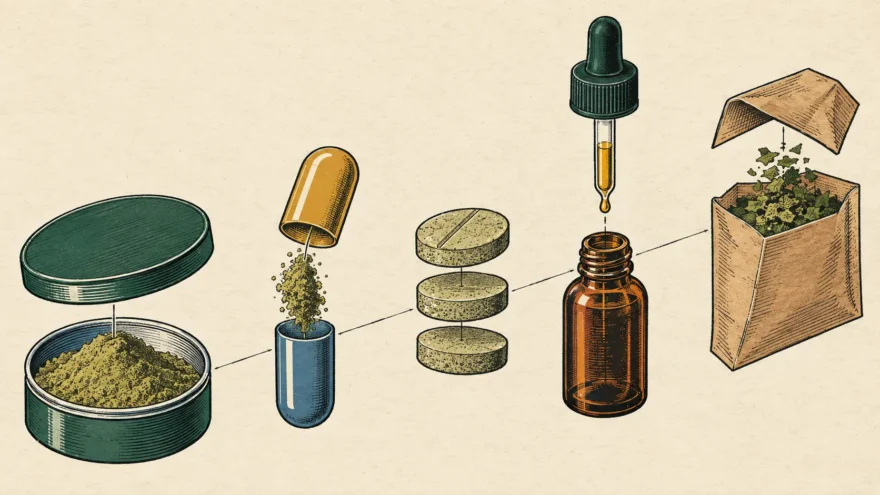
Powder, capsules, extract, liquid extract and pressed tablets, in five parts below.
Every form of kratom on this site begins as the same thing. Leaves from one tree, Mitragyna speciosa, dried and shipped out of Southeast Asia. What happens after that is the form, and the form is what you actually buy.
Two questions separate the five, and neither one is on the front of a package. The first is whether you are holding leaf or a concentrate made from leaf. The second is who decided the size of a serving, you or the factory.
Answer those two and the shelf stops looking like five unrelated products.
Kratom Powder
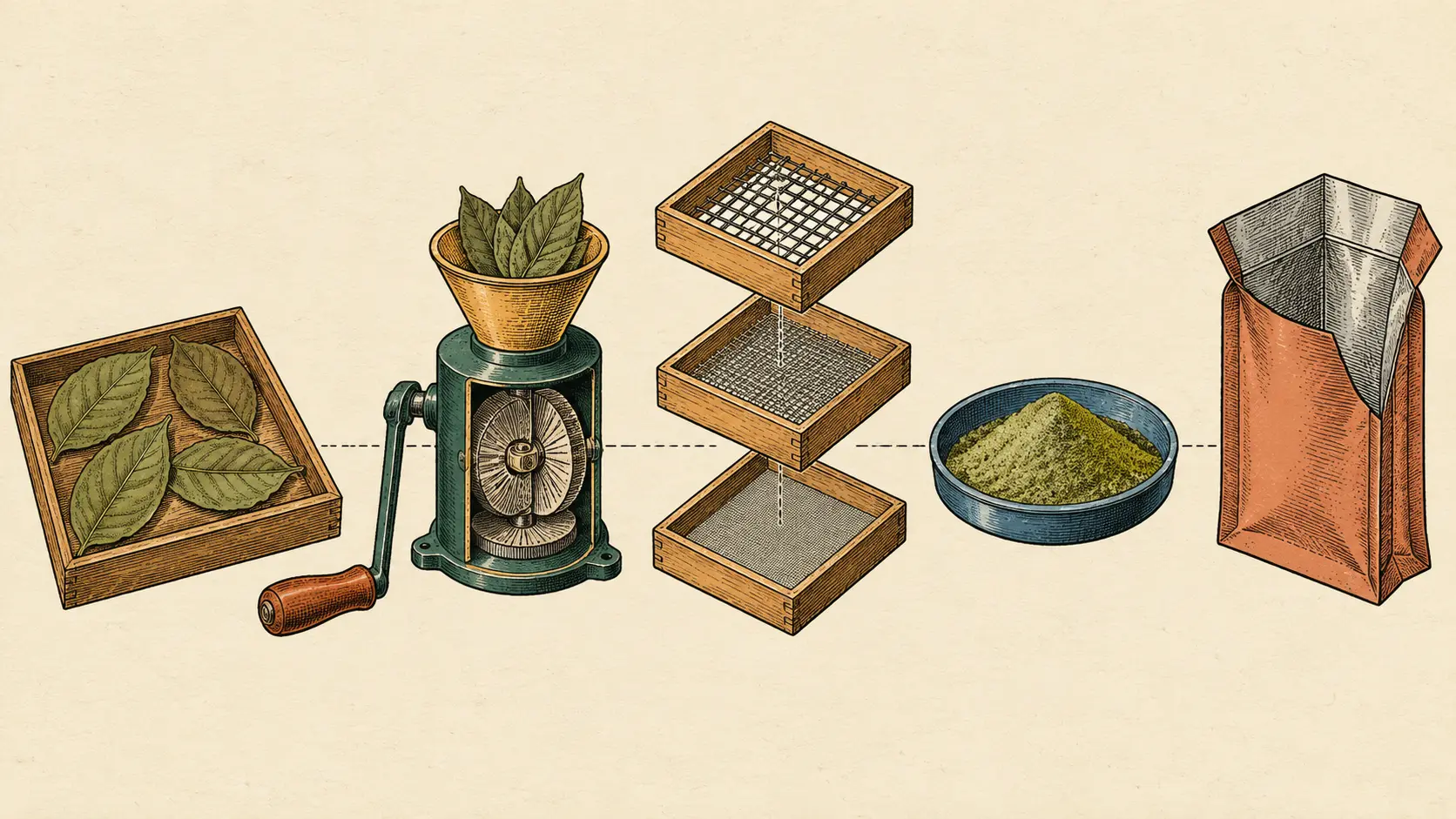
Dried leaf milled to a powder, and the plainest form there is. How milling works, what a mesh number on a purchase order means, and why the grind is decided before it leaves Indonesia.
Kratom Capsules
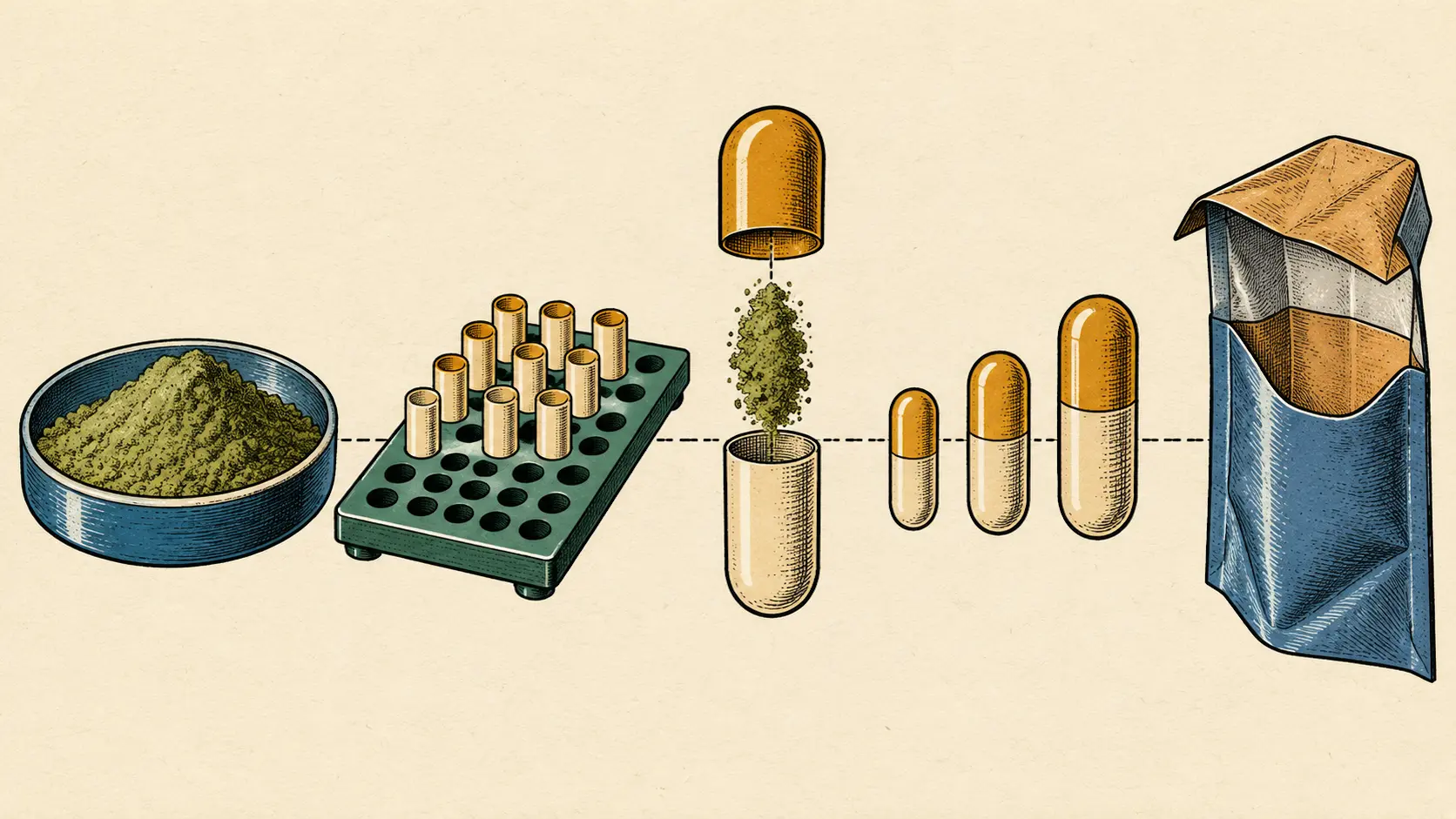
The same milled leaf inside a two piece shell. What a capsule size actually measures, why it is a volume rather than a weight, and what the shell is made of.
Kratom Extract
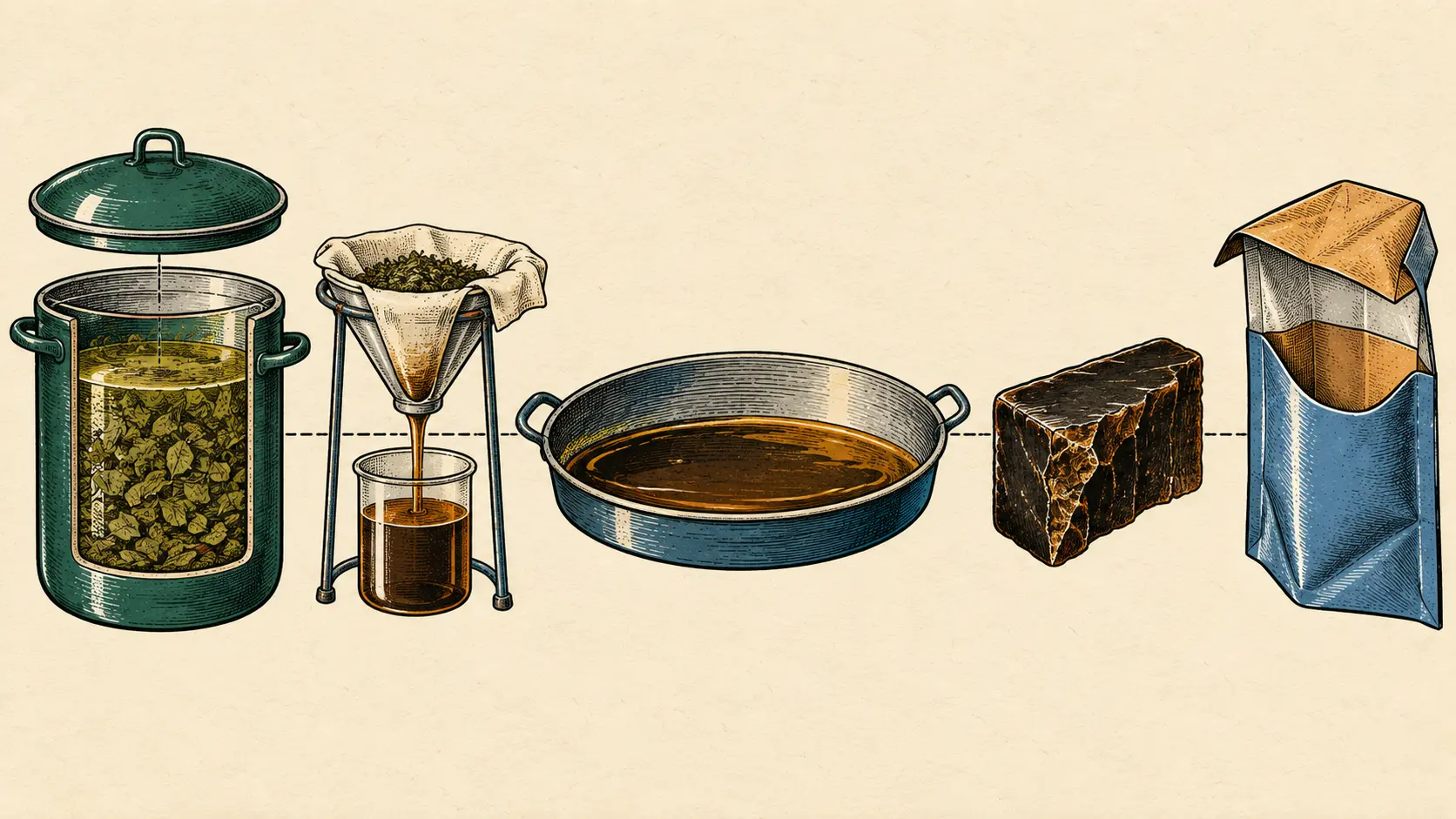
Leaf with the bulk taken out, which is a different material rather than a stronger powder. How an extract is made, what a multiplier is worth, and how to spot a real one.
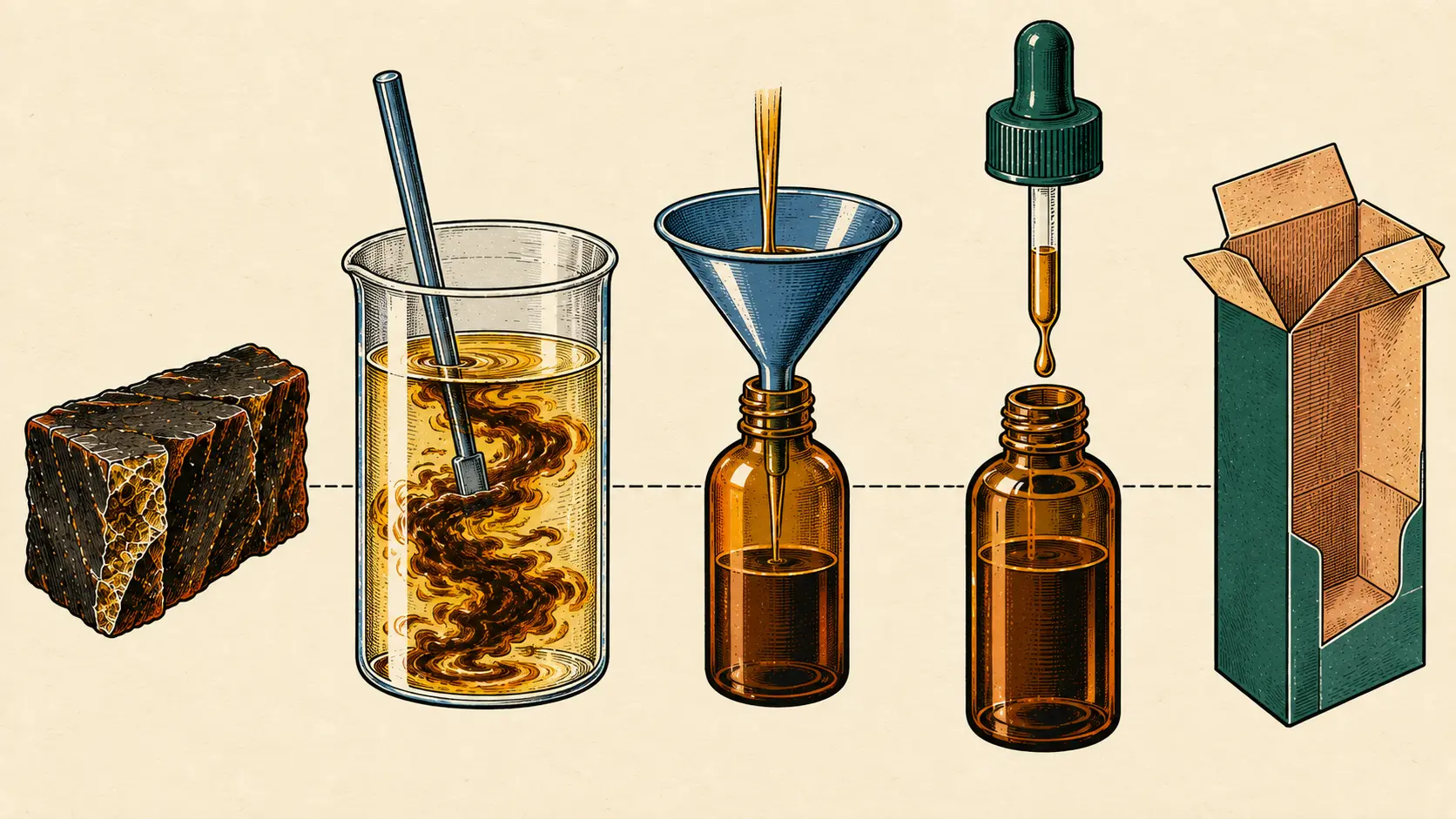
Liquid Kratom Extract
Concentrate blended into glycerin and water and bottled in small volumes. What is in the bottle, why three different numbers on it describe the same liquid, and why a small bottle is not one serving.
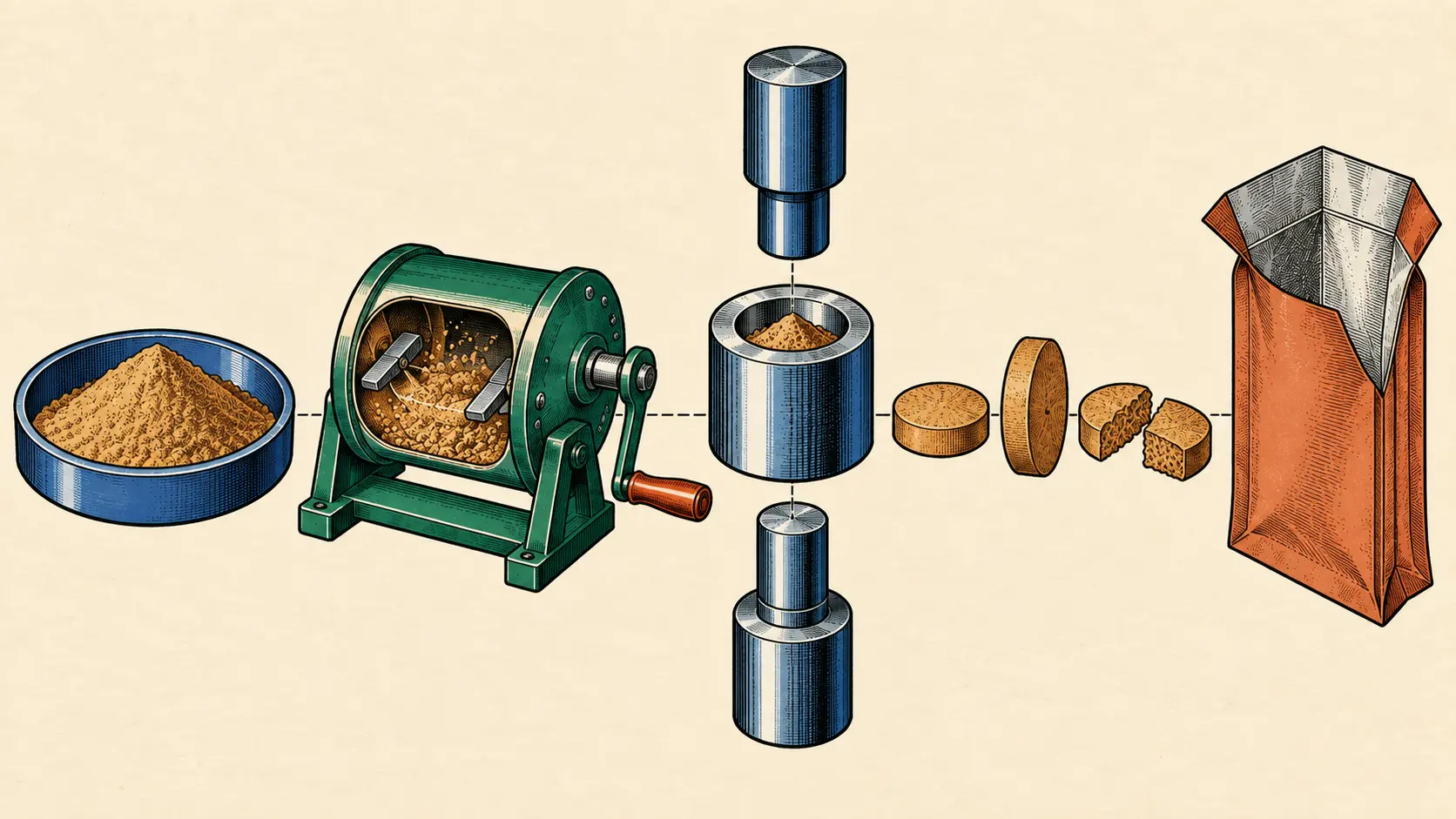
Kratom Extract Tablets
Concentrate pressed into a fixed shape, with the pressing ingredients along for the ride. How pressing works, what the other ingredients do, and why two identical looking tablets can be three times apart.
Leaf or extract, and why that is the first question
Two families, not five.
Powder and capsules are leaf. What is in the package is milled leaf and nothing else, and a capsule is that same powder inside a shell. The other three are extract, which is leaf that has been soaked, strained and cooked down until most of the plant is gone and what stays behind is concentrated.
The difference is not a matter of degree. A gram of powder is a gram of leaf. A gram of extract is what survived from several grams of leaf, and nobody can tell you how many from the front of the package.
So moving from powder to capsules is a packaging decision. Moving from either one to an extract is a change of material, and it’s worth reading it that way.
It shows up on the laboratory reports too, and that’s where it catches people out. A leaf report and an extract report are the same document with the same column headings. They do not read the same at all. Leaf carries its alkaloids in the low milligrams per gram. An extract carries those same alkaloids many times higher. The per serving column is not always counting the same thing either. A number that looks ordinary on one report looks wrong on the other. If you are used to reading one kind, take the other one carefully the first time. Ours are all on our lab tests page.
Who decided the size of a serving?
We’d put this question on every shelf in the industry if we could. The answer is different for all five, and almost nobody asks it.
With powder, you do the measuring. The package prints a serving, and a scale is how you portion it. That is the most control any form gives you, and it is also the most responsibility.
With capsules, a filling machine decided, and it filled to a weight. The count on the package follows from that weight. It’s an estimate rather than a promise, which is why our copy says about.
With extract powder, you decide again, and that is the trap. It looks like leaf powder and runs a little lighter in the hand. A habit formed on leaf carries straight over to something several times more concentrated. It’s the one extract form we won’t stock.
With a liquid, the panel decided and printed it. The catch is the container. A 30ml bottle is the shape and size of a checkout shot, and a checkout shot is built to be finished in one sitting. The bottle argues against its own label.
With a tablet, the press decided and the blister card holds the line. Every tablet is separated from the next one, so reaching for a second is a deliberate act rather than a drift. Of the five, it’s the hardest to lose track of.
That’s the five ranked by how much of the measuring is done for you. It says nothing about which one is better.
What about crushed leaf?
There’s a sixth form we do not sell, and it belongs on this page anyway.
Crushed leaf is what it sounds like. Leaf broken down coarsely rather than milled fine, closer to a loose tea than to flour. It is brewed and strained rather than stirred into something and swallowed. It sits on the leaf side of the split above, with all the measuring left to you.
Two plain reasons we don’t stock it. Nobody has ever asked us for it. And when we looked at the American sellers who do carry it, their listings had almost no reviews on them. That is the closest thing to a demand measurement you can get from outside a business.
We describe it here anyway. A person cannot ask for something they do not know exists, and part of why it sells so little may be exactly that. If people start asking, we will carry it.
Supply works against it too. Indonesia’s export rules set a maximum coarseness on kratom leaving the country. Material coarser than that cannot be exported at all. Kratom Powder covers where that floor sits and what it does to every package of American kratom.
Where extract capsules fit
There’s one more product on our shelf with no card of its own, and it’s worth a line so it doesn’t surprise you.
Extract capsules are extract powder inside a shell, which makes them the extract version of a leaf capsule. From the outside the two are hard to tell apart. What’s inside them is not the same material at all, and that’s the confusion problem in the smallest package it comes in. We carry one, and it is at kratom extract capsules.
They didn’t get a page of their own because there’s one of them, and there aren’t a thousand honest words to say about one product. What they are is covered inside Kratom Extract, and the shell itself is covered on Kratom Capsules.
Why our lineup looks the way it does
Because most of it didn’t sell.
We opened carrying something like thirty extract products. Flavored shots, liquids, honeys, taffies, more tablets than we stock now, more capsules than we stock now. Most of them sat on the shelf.
I apply the 80-20 rule to most things in my life and the shelf turned out to be no exception. Roughly 80 percent of our sales came from roughly 20 percent of our products. The other 80 percent got scratched, and what is on the shelf now is the short list that survived.
The sales order says more about our customers than any description could. Powder outsells everything. Capsules are a close second. All the extracts together are third. Inside the extracts the liquids lead, tablets follow, and extract capsules are last and also the newest. Inside the liquids, the larger bottles outsell the smaller ones by a wide margin. Read that against what the section above says about that bottle.
We keep the extract shelf short on purpose, and we will say plainly that we are not enthusiasts about the category. A concentrated format is a different material with its own set of things to get right, and it is not where anybody should begin.
What we are after is simpler than a recommendation. If somebody buys a concentrated form, we want that to have been a deliberate choice. Made by a person who knew what the material was, what the numbers on the package meant, and what the certificate said. That’s the whole reason these pages exist, and it’s why the extract pages are the longest ones in this section.
Where to start
With the plain leaf, and with the page that matches what’s in your hand.
If you are new, Kratom Powder is the entry point and Kratom Capsules is the same leaf with the measuring already done. Neither one asks you to understand a concentration figure before you buy. If you already have a package in front of you, go straight to the page for that format. Each one walks the panel, the ingredient list and the laboratory report for that exact thing.
None of these pages covers how often, how much or how long, and that is deliberate. Responsible Kratom Use owns those questions and answers them properly.
And extracts are not where a new customer starts. That’s the one sentence on this page we’d keep if we had to cut every other one.
Back to the Kratom Guide.