
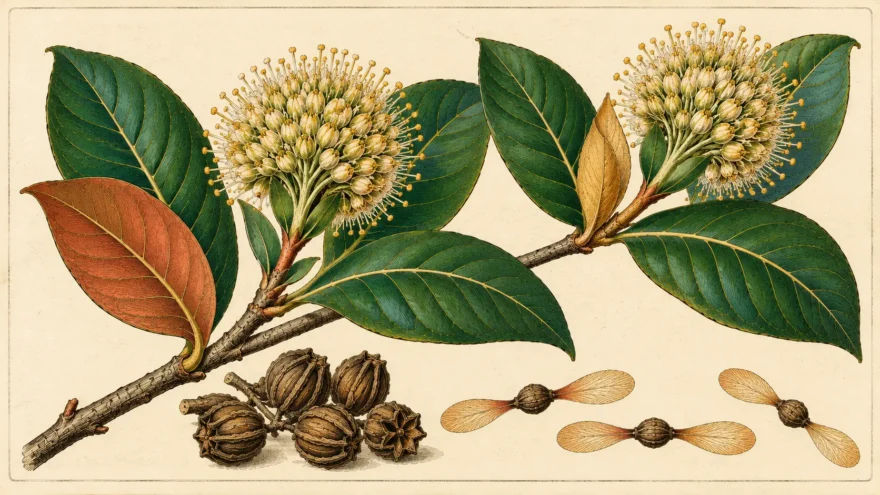
What Is Kratom?
Kratom is one tree, one leaf and a handful of names people put on it. The plant, where the leaf actually comes from, what is in it, how it reaches a shelf, and how people take it and keep it, in seven parts below.
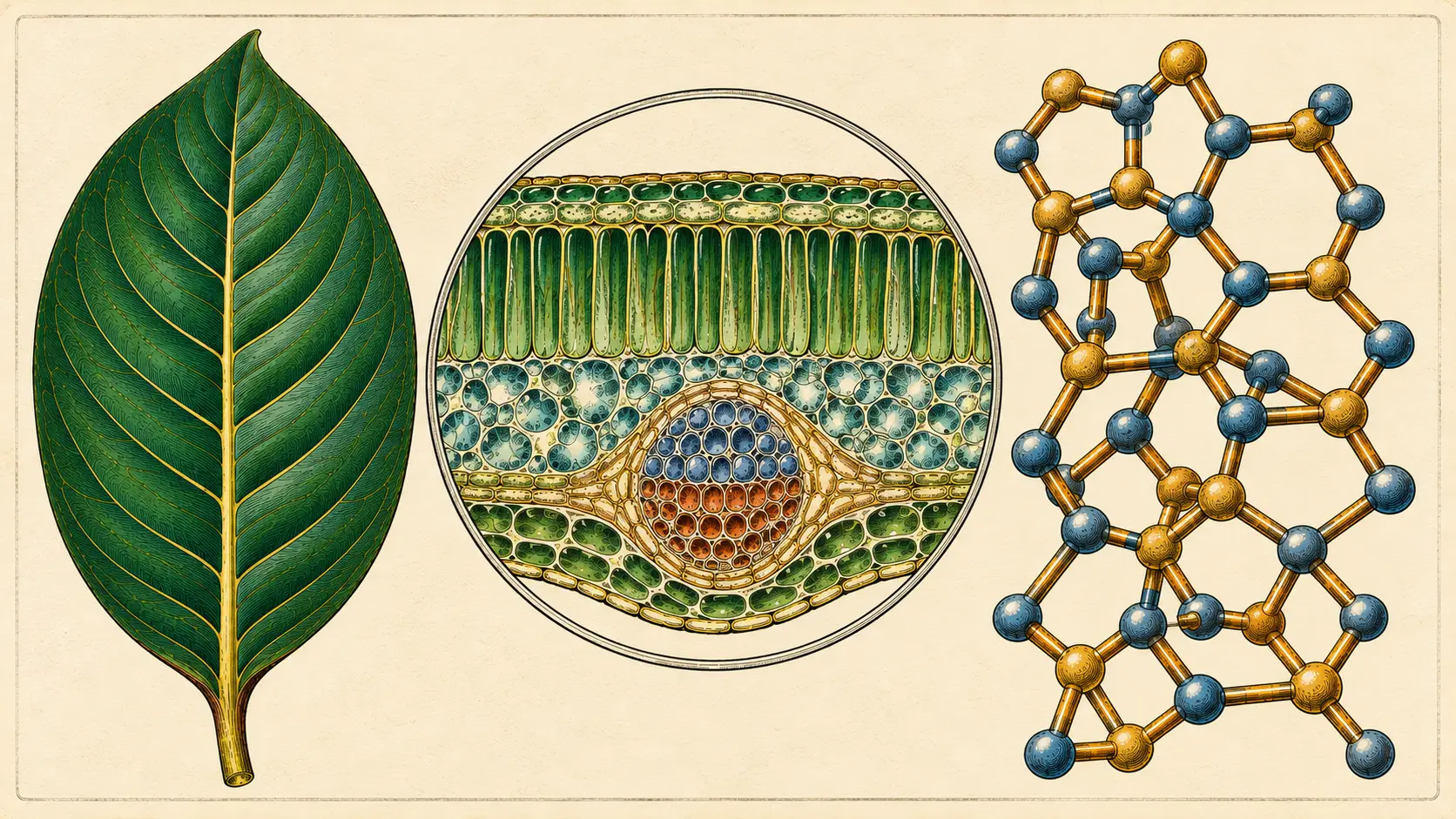
Kratom Alkaloids
Mitragynine is the most abundant compound in the leaf and 7-hydroxymitragynine occurs in traces. What an alkaloid profile is, what a percentage on a report means, and why the numbers move from batch to batch.
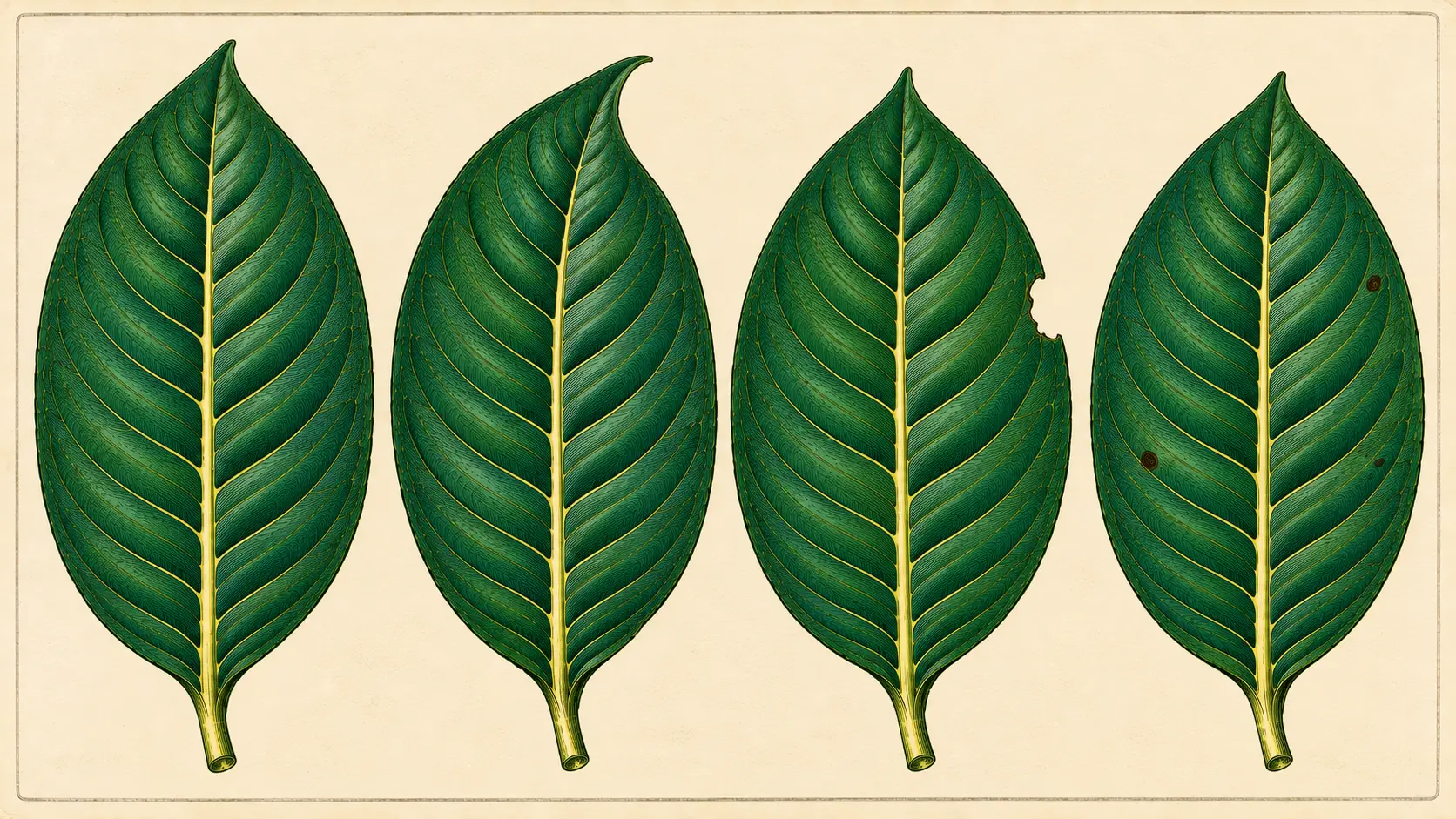
Kratom Strain Names
Maeng da, bali, thai and borneo are trade names rather than botanical varieties. Where each one came from, what it does and doesn’t tell you about the leaf, and who gets to decide what goes on the package.
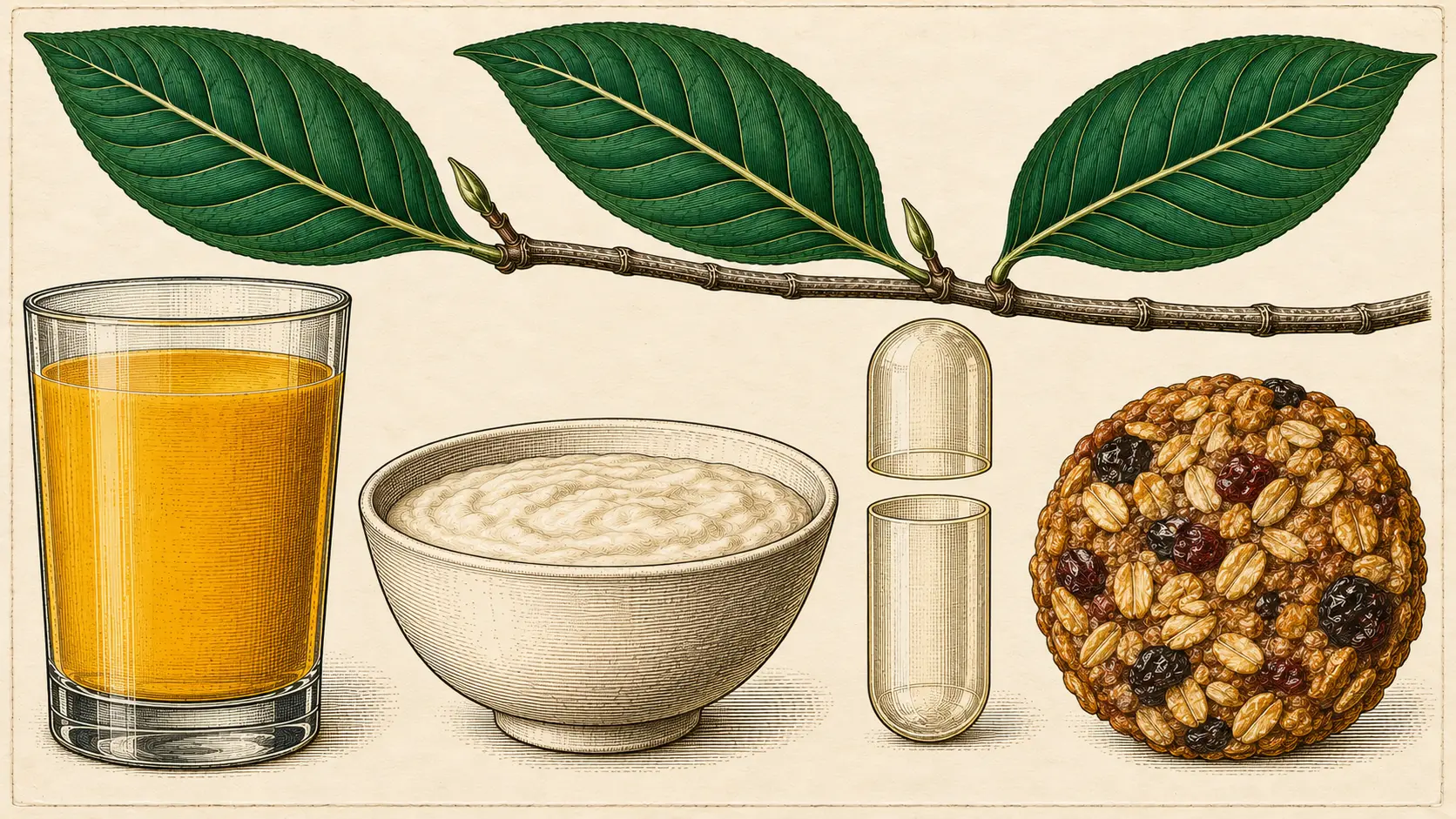
How to Take Kratom
Toss and wash, juice, yogurt, smoothies and capsules. How each route works, what hides the taste, and the one juice we’d keep out of the glass.
How to Make Kratom Tea
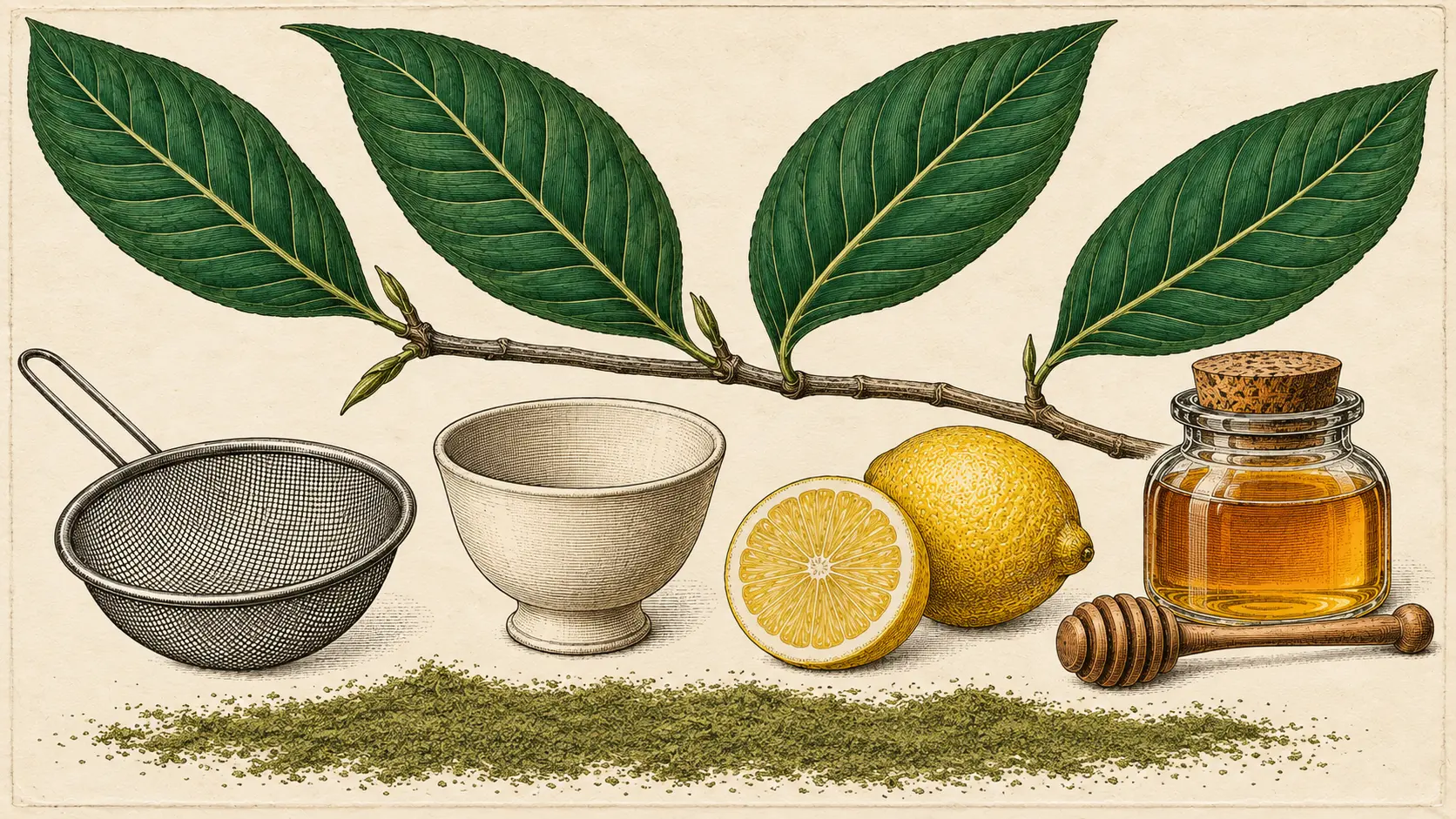
Kratom tea is powder steeped in hot water, then strained. What laboratory testing showed about heat, what straining leaves behind, and what lemon really does.
Does Kratom Expire
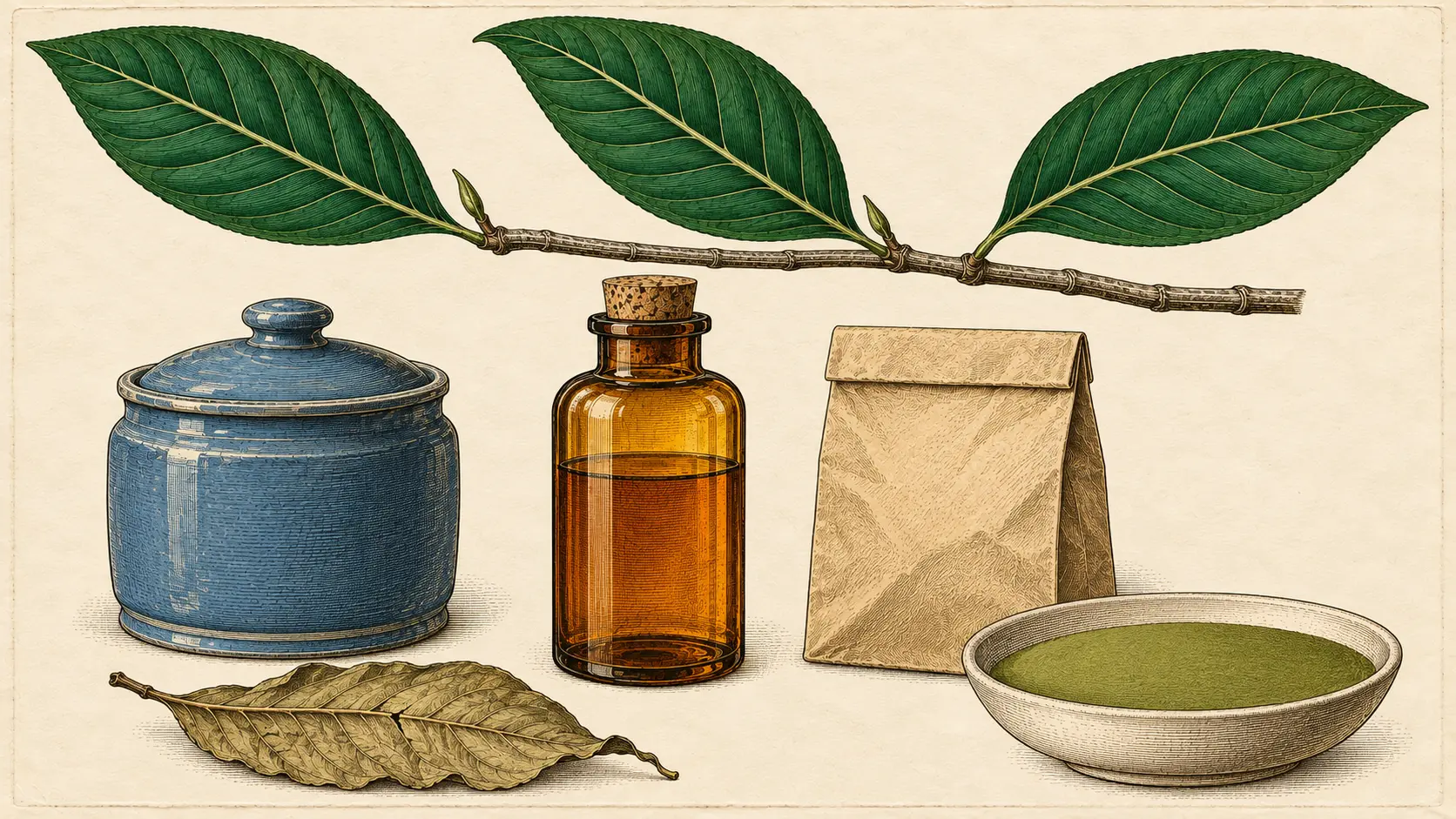
Dried leaf ages rather than spoils. What heat, light and air do to it over time, how extracts hold up, and what the date on a package means.
History of Kratom
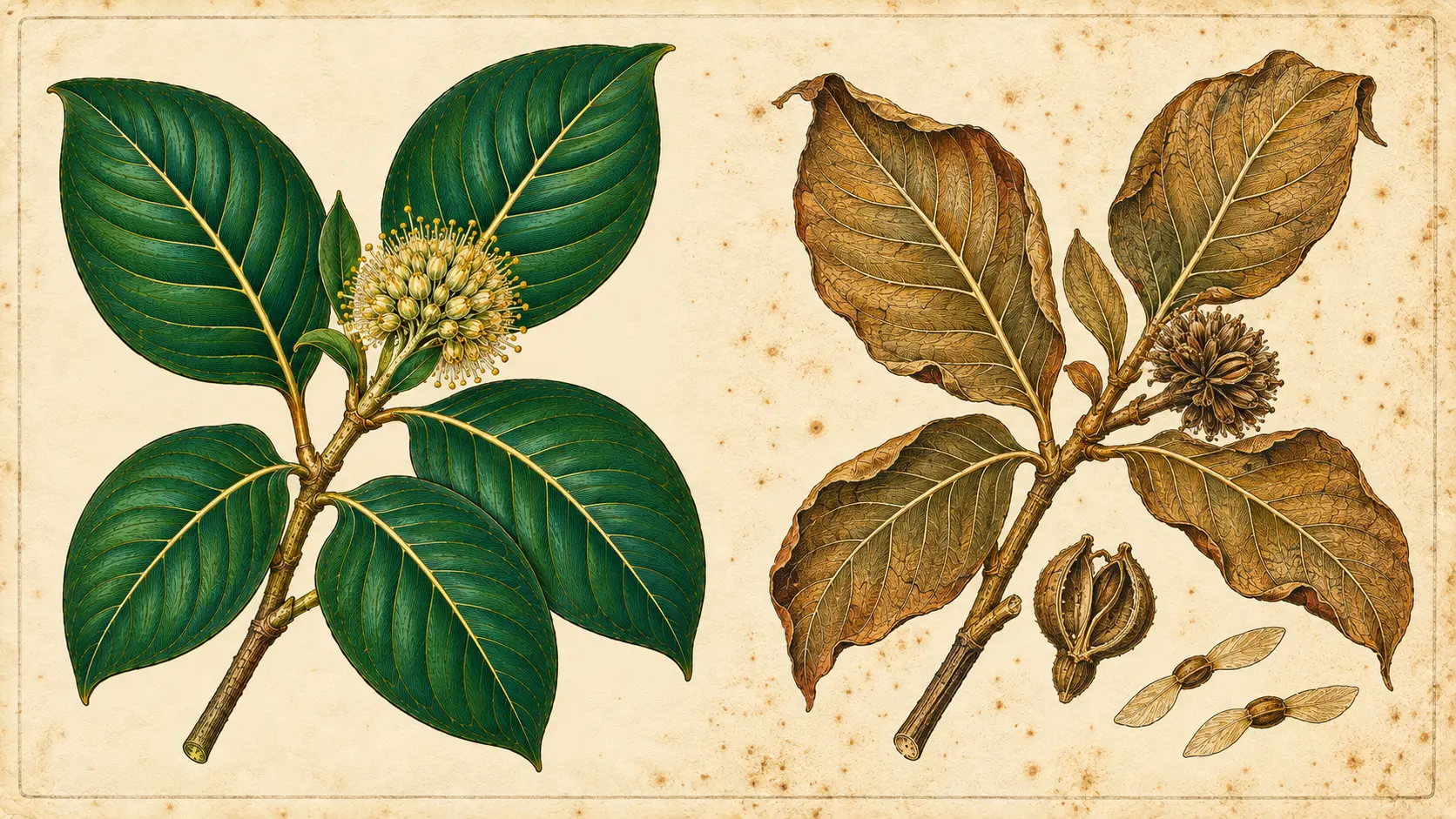
Generations of use in Southeast Asia, a far shorter record in the West, and a US market that took its present shape within the last two decades. How it arrived and what shaped it on the way.
Where Does Kratom Come From
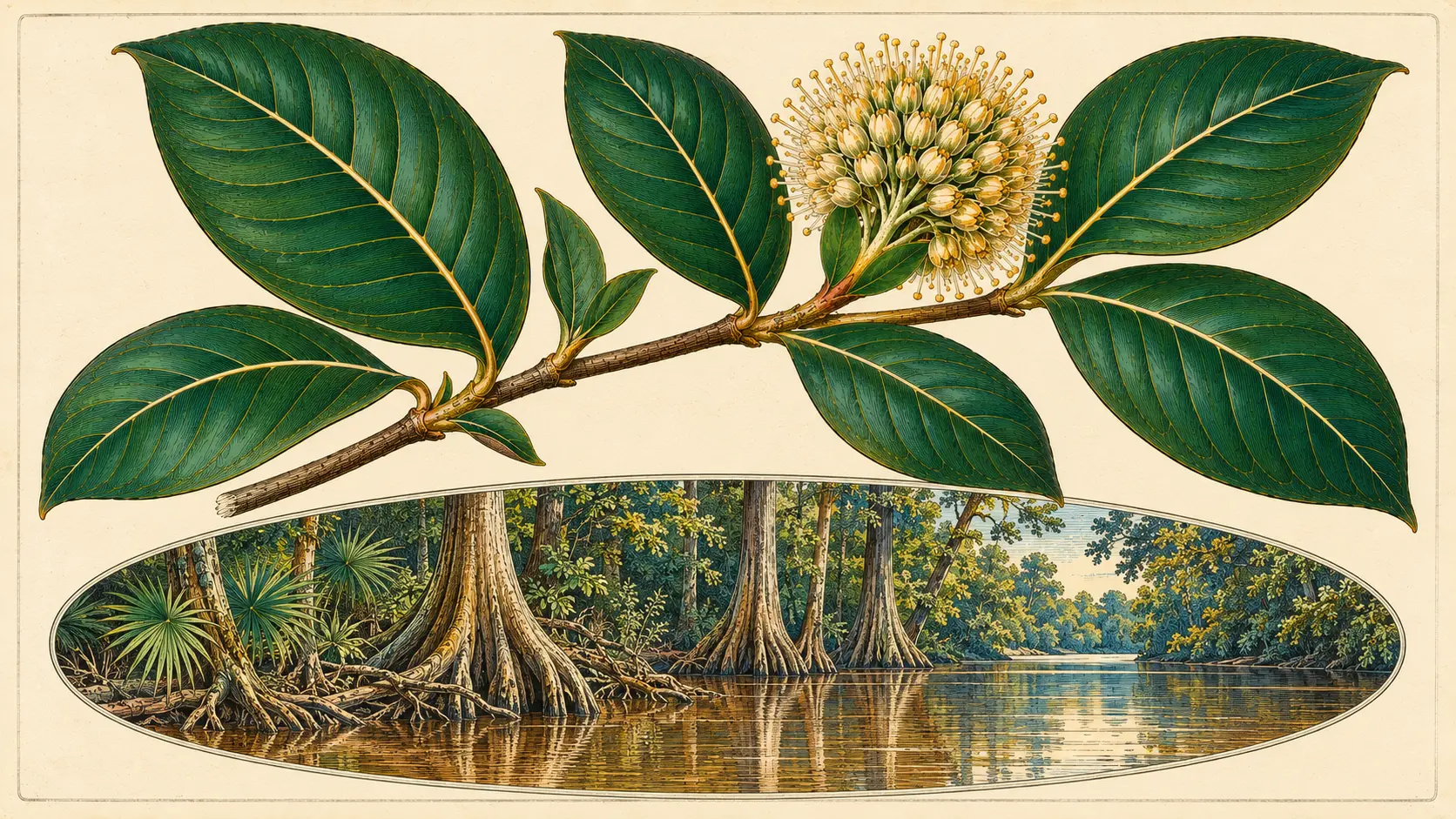
The tree’s range covers much of Southeast Asia. Almost every package sold in the United States traces to one Indonesian province. Which regions produce the leaf and how it reaches a US shelf.
The short answer
Kratom is a tree. Its botanical name is Mitragyna speciosa, and it belongs to the same plant family as coffee. It grows across Southeast Asia. Only the leaf is sold. The leaf is picked, dried, and milled into a fine green powder, and that powder is the base of nearly every kratom product on the US market. It ships loose in pouches, packed into capsules, pressed into tablets, or concentrated into an extract.
Most answers stop at Southeast Asia, which is true and tells you almost nothing. The tree’s range runs from Thailand and Malaysia through Indonesia, and it’s been reported in Vietnam and Myanmar. What Americans actually buy is far narrower than that, and it comes from one province. This page covers the plant, where the leaf really comes from, what’s in it, and how a leaf on a branch ends up as a sealed pouch on a shelf.
What is the kratom plant?
Kratom is an evergreen tree called Mitragyna speciosa, and it sits in the Rubiaceae family alongside coffee. Forestry researchers at Kasetsart University in Bangkok, working with the University of Florida, describe it as a small to medium tree of roughly 13 to 52 feet. They give its range as peninsular Thailand, Malaysia and other parts of tropical Southeast Asia. It has been reported in Vietnam and Myanmar too.
It is a water tree. Kew’s Plants of the World Online records Mitragyna as a medium to large buttressed tree. It grows in seasonally flooded, swampy and alluvial soil, and along rivers, from sea level up to about 200 feet. That habitat note explains more about the modern trade than it first appears, and it comes up again below.
Only the leaf is used. Nothing is made from the bark, the root, the flower or the wood.
One point is worth stating plainly. Miss it and the rest of the subject stays confusing. Every kratom product sold, in every color and under every name, comes from this one species. White, green, red and gold are not different trees. Maeng da and bali are not different trees. They are the same tree, grown in different places or handled in different ways after picking.
Where does kratom grow?
Kratom grows wild across much of Southeast Asia, but nearly all of the leaf sold in the United States is farmed in one Indonesian province. The tree’s home range is wide. What the American market runs on is much narrower.
That province is West Kalimantan. It sits on the island of Borneo, which is divided between Indonesia, Malaysia and Brunei, and Kalimantan is the Indonesian portion. Indonesia’s Ministry of Trade puts roughly 80 percent of West Kalimantan under the wet, fertile land the tree favors. Farmers there have moved into the crop in numbers. The same ministry recorded Indonesian kratom exports of 30.54 million dollars in 2023. The leading destination was the United States.
That is why a name printed on a package is a poor guide to where the leaf grew. A product called thai was very likely not grown in Thailand. The name points to a style, not to a country, and the two came apart a long time ago. There’s more on that in where kratom comes from.
What is inside a kratom leaf?
Kratom leaf holds a class of compounds called indole alkaloids, and the DEA reports that at least 54 of them have been isolated from the plant. Two draw most of the research. Mitragynine is the most abundant, at about 66 percent of total alkaloid content. 7-hydroxymitragynine is a minor one, at under 2 percent.
These are kratom’s two main alkaloids. They aren’t its only two. A page that says kratom has two alkaloids is naming the short list rather than the leaf.
How much of either the leaf holds is not fixed. This is where most descriptions of kratom stop. Researchers from Kasetsart University’s Faculty of Forestry and the University of Florida sampled wild kratom across Thailand. Mitragynine ranged from 7.5 to 26.6 milligrams per gram of dry leaf. That’s a three and a half fold spread inside one species. They traced it to how much light the tree got, humidity, how much water the soil held, soil pH and soil calcium.
So the tree that grew the leaf matters, and so does where it stood. Two packages carrying the same name, from the same region, in the same year, need not match. That’s how a farm crop behaves. It is not a defect, and it’s the reason each batch is tested. There’s more on the chemistry in kratom alkaloids.
How does a leaf become a powder?
A kratom leaf becomes powder in five steps: harvest, de-stemming, drying, milling, then testing and packing. The route from branch to pouch is short, and almost all of it happens before the leaf leaves Indonesia.
- Harvest. Leaves are picked by hand from mature trees, some in forest gardens and some wild.
- De-stemming. The stem and the thick part of the central vein are stripped out. They mill poorly and add bulk without adding alkaloid.
- Drying. The leaf is dried, indoors or outdoors, and how it’s dried is what separates the color grades.
- Milling. Dried leaf is milled to a fine powder and sifted, so the grind is consistent throughout.
- Testing and packing. Finished powder is tested and sealed.
Step three does more than remove water. A 2025 study from the University of Florida and Oregon State University put kratom leaf through four withering times and five drying temperatures. It ran across two seasons. Withering raised mitragynine by 14 to 65 percent in one cultivar. Low drying temperatures preserved mitragynine and two related alkaloids. Higher ones did not. 7-hydroxymitragynine averaged 0.02 to 0.04 percent and turned up only in certain seasons. Drying is not storage. It changes what is in the leaf.
Step five is not a formality either. The FDA has warned the public when kratom products were found contaminated with Salmonella, or with concerning levels of heavy metals. It says those contaminants have resulted in documented illnesses. Indonesia’s own export rules answer the same problem. Its Ministry of Trade cited exported kratom contaminated with metal and iron.
Those rules are Permendag Number 20 and Number 21 of 2024, in force from October 11, 2024. Whole kratom leaf, and crushed leaf coarser than 600 microns, may not be exported at all. Powder and crushed leaf at 600 microns or finer may be. That takes a registered exporter, an export approval and a surveyor report. So a US company buys milled powder rather than raw leaf, and the milling was done at the source.
Ours arrives as individual vacuum-sealed kilos in clear film, separated by color. The farmer dried each lot toward a color rather than growing a different tree for it. Clear film is the point. You can see the powder before anything is opened. Kratom powder is green and stays green. A red that was dried the way a red is dried carries a deep brown-red cast over that green. More than once we’ve received a lot labeled red that came in bright green. Nothing was wrong with the leaf. It simply had not been dried the way the label claimed, so we sent it back. That is what the color on a label is actually reporting, and it’s why we look at it before we test it.
What happens on this side is packing. Powder is weighed into pouches, filled into capsules, pressed into tablets or made into extract. Those routes are covered in kratom forms, and the full catalog sits under buy kratom online.
What do the color and strain names mean?
A kratom product name is usually built from two parts, and they come from two completely different places.
The color is the farmer’s. It reports how the leaf was dried and handled after picking, not something read off the growing plant. The person who dried it assigns it. Growers work toward three or four color variations from the same crop. That is covered in kratom colors.
The rest of the name is trade language, and it’s applied much later. Maeng da, bali, borneo, malay and the others began as words for grade, stock, or the port a shipment left from. No register anywhere says what maeng da must be.
Here is how that actually works, because the chain is rarely described. A farmer in a transparent relationship with a distributor doesn’t invent names. He dries toward a color and ships the lot labeled with that color, and nothing else. A distributor can add a name at that point. Ours doesn’t. The names on our pouches are applied here, by us, and they’re chosen against what customers search for. That is the industry norm rather than an exception. We’d rather say so than let a name imply a provenance it doesn’t have. The color on the package is a fact about how the leaf was dried. The name beside it is a fact about the market.
That is not a scandal, and it doesn’t make the product worse. It does mean the name tells you what a seller meant, not what a laboratory would find. How the layers stack is covered in types of kratom, and where the names came from is covered in kratom strain names.
What kratom is not
Kratom is not an approved medication, not an approved dietary ingredient, and not a federally scheduled drug. Those are three separate questions with three separate answers. They get conflated constantly.
The FDA states that no prescription or over-the-counter drug products containing kratom or its known alkaloids are legally on the market in the United States.
Under Import Alert 54-15, the FDA holds that kratom qualifies as a dietary ingredient under section 201(ff)(1) of the Federal Food, Drug, and Cosmetic Act. The agency also holds that it’s a new dietary ingredient under section 413(d), because it has no information showing kratom was marketed as one in the United States before October 15, 1994. That date turns a legal question into a historical one, and what the record actually shows about when kratom reached the United States is covered in the history of kratom.
At the federal level it isn’t scheduled. The DEA records that kratom is not a controlled substance or listed chemical under the Controlled Substances Act. State and local law is a different question with a different answer in different places, and that is covered in is kratom legal.
Back to the Kratom Guide.